Guide
Shared vs Private Kitchen Rental: How to Choose
Shared kitchens cost less and private kitchens give control. This guide shows how to decide which fits your production, team and budget.
Free to inquire. We reply by email, usually within one business day.
Choose a shared kitchen if you cook regularly in modest volumes, want the lowest cost and can work within scheduled shifts. Choose a private kitchen if you need exclusive access, run a team, leave equipment set up or have strict allergen or confidentiality needs. Many businesses start shared and move to private as they grow.
The core difference
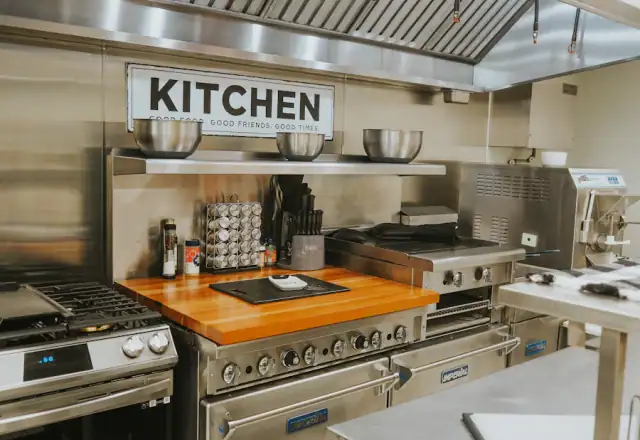
In a shared kitchen several businesses use the same space at different times, each with an allocated workstation and access to shared equipment. In a private kitchen one tenant has exclusive use of a unit, sets its own schedule and controls what happens in it. Everything else, from cost to risk, follows from that difference.
Sharing spreads fixed costs across many tenants, so each pays less. Exclusivity concentrates cost on one tenant, who pays more but gains freedom. Neither is better in the abstract; the right choice depends on how you work.
The sections below compare the two on the factors that matter most to food businesses, so you can score each against your own situation.

Side-by-side comparison
| Factor | Shared kitchen | Private kitchen |
|---|---|---|
| Cost per month | Lower | Higher |
| Access | Scheduled shifts | Exclusive, often 24/7 |
| Equipment | Shared, reserved by booking | Dedicated to you |
| Storage | Allocated shelves | Your own space |
| Allergen control | Depends on separation | Full control |
| Confidentiality | Others nearby | Private |
| Flexibility | High, easy to change plan | Contract with notice terms |
Use the table as a prompt. Mark the rows that matter most to you and see which column wins.
Cost: what you actually pay for
Shared plans charge for time, with a monthly block of hours and optional storage. Private plans charge for the unit, with utilities included or billed separately. At low hours, shared is almost always cheaper. As hours rise, the effective hourly cost of a private unit falls, and at some point it crosses below the cost of a shared plan.
Find your crossover by estimating monthly hours and comparing quotes. Include storage, equipment fees and any extra charges. The cost guide shows how to model this, and our pricing page explains what drives each quote.

Control, allergens and consistency
Control matters most for businesses with strict standards. If you make allergen-free, vegan or kosher products, even careful sharing leaves some risk of cross-contact, and a private kitchen removes it. If you leave equipment set up, run specific temperatures or protect recipes, private space avoids the daily reset.
For many products, strong cleaning, labeling and scheduling make shared space perfectly safe. Ask how the kitchen separates tenants and read allergen management in a shared kitchen before deciding.
Team size and scheduling
Small teams fit shared stations easily. Larger teams run into limits on bench space and equipment, and scheduling a team around other tenants gets hard. If you have several staff, need early starts or run multiple shifts, private access simplifies life.

- One or two people, a few shifts a week: shared
- A team of three or more cooking most days: consider private
- Seasonal peaks: shared plus short-term top-up
- Unusual hours: check access hours, both formats may work
A decision framework
- Estimate monthly hours, including setup and cleaning
- List equipment you cannot work without
- Decide how much allergen and confidentiality risk you can accept
- Get written quotes for both formats at your hours
- Compare total monthly cost, not headline rate
- Choose the cheaper option that meets all must-haves
If both options meet your must-haves, pick shared and plan an upgrade date. If one fails a must-have, the choice is made for you.
A quick decision rule
If your weekly production is under about fifteen hours and your equipment fits standard kitchen stations, a shared kitchen is almost always cheaper. If you regularly book more than twenty-five hours, need secure storage or custom equipment, or cannot tolerate scheduling constraints, price a private unit. Between those numbers, compare actual quotes for both and look at the cost per productive hour.
Hybrid approaches that work
You do not have to choose once and forever. Some businesses keep a shared membership for regular production and book a short-term or private block for peak seasons. Others use a private unit for core products and hourly shared time for experiments. Mixing formats lets you match capacity to demand without carrying idle space.
Ask whether your operator offers multiple formats in the same building, which makes switching simple.
Questions to ask when comparing quotes
- What exactly is included in each plan, including storage and utilities?
- How is equipment reserved during my shifts?
- What notice do I need to change plans?
- How are allergens separated from other tenants?
- What are the access hours and security arrangements?
- What happens if equipment breaks?
Ask the same questions of every kitchen and write down the answers. Clear, specific replies are a sign of a well-run operation.
A scenario: the same business in both formats
Picture a baker who works Tuesday, Thursday and Saturday nights, producing about 300 loaves a week. In a shared kitchen she books three overnight shifts, keeps flour and packaging on an allocated shelf and uses the shared ovens and mixer. Her monthly cost is moderate and her equipment is professional, but she resets her station each shift.
In a private kitchen she would leave her mixer set up, adjust oven programs to her recipes and hire a helper on a different schedule, but she would pay noticeably more. Whether that is worth it depends on how much time the resets cost her and whether a second person can start sooner. The scenario shows why the answer depends on workflow, not on pride in having your own space.
When and how to move from shared to private
Signs you are ready include booking most available shared hours, scheduling conflicts that block growth, needing to leave equipment or stock set up and a monthly shared bill approaching the cost of a private unit. Plan the move: confirm unit specifications, schedule the switch around production, transfer stock and update documents.
See upgrading from shared to private kitchen space. When you are ready, request a quote for both and compare side by side.
More on choosing and renting a kitchen
This page is part of our choosing and renting a kitchen guide. Follow the pathways below to move up to the overview, compare alongside topics or go deeper into the detail.
Start with the overview
- Kitchen Rental Resource CenterPlain-English guides organized by what you need to do: choose a kitchen, operate safely and…
- Pricing and Rental PlansA clear explanation of what you pay for, what changes the price and how to get a quote…
- How Renting WorksSix clear steps from first inquiry to your first confirmed session, with what to prepare…
Compare alongside
- Commercial Kitchen vs Home KitchenA home kitchen can start a business, but it rarely scales. See the real differences in…
- What Is Commercial Kitchen Rental?Everything a first-time renter needs to understand before comparing kitchens, from how the…
- Cloud Kitchen vs Production KitchenBoth are professional kitchens, but they are built for different jobs. This guide shows how…
- Your First Day in a Rental KitchenYour first session sets the pattern for everything after it. Use this checklist to start…
Go deeper
- Private Kitchen RentalExclusive access to your own licensed kitchen unit, on your schedule, with your equipment…
- Shared Kitchen RentalAllocated workstations, shared professional equipment and clear scheduling, the most…
- Upgrading from Shared to Private Kitchen SpaceA private kitchen can unlock growth, but only at the right time. Here is how to judge and…
- Commercial Kitchen Rental Cost GuideRental cost is not one number. This guide breaks it into drivers you can estimate, so you…
Frequently asked questions
Straight answers to the questions food businesses ask most about shared vs private kitchen rental.
Is a private kitchen worth the extra cost?
It is when control, exclusivity or volume matter more than the premium. Compare your hourly cost in both formats.
Can I start private?
Yes, but most businesses start shared to keep costs low while demand is unproven.
Is shared safe for allergens?
It can be with strong separation and cleaning. Strict claims may need private space.
Can I switch easily?
Usually yes, subject to availability and notice terms.
Which is better for a startup?
Shared or hourly, because costs stay low and flexibility high.
Do shared kitchens crowd you?
Well-run ones schedule equipment so crowding is rare.
Put this guide into practice in a real kitchen
Tell us about your food business and the hours you need. We match you with a licensed kitchen and send a written quote.