Who uses the kitchen
Bakery Kitchen Rental: Commercial Ovens and Baking Space
What bakers need from a rented commercial kitchen: oven capacity, mixers, proofing, cooling racks and flour storage, plus how to plan overnight production.
Free to inquire. We reply by email, usually within one business day.
Bakery kitchen rental gives bakers licensed space with commercial ovens, mixers, proofing and cooling equipment and dry storage for flour and packaging, without building a bakery. Bakers rent by the hour, month or contract, often at night or early morning, to produce bread, pastries and cakes for cafés, markets and retail.
Why bakers rent a commercial kitchen
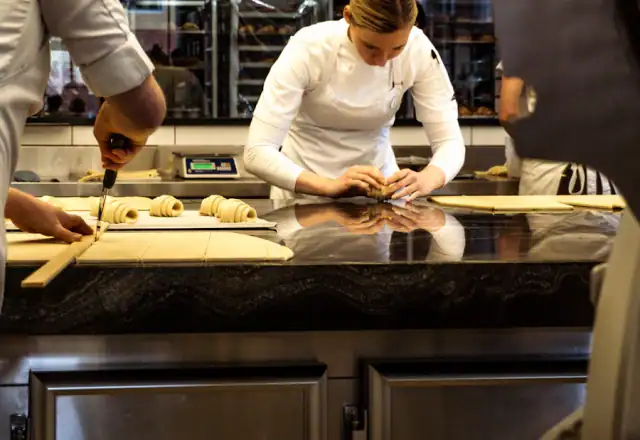
Baking is equipment-hungry. A serious baker needs oven capacity, a mixer that handles heavy dough, proofing space, cooling racks and plenty of flat bench space. Few home kitchens can supply that, and building a commercial bakery from scratch is expensive. Renting gives bakers access to the right equipment and a licensed environment to sell wholesale or retail.
Rental also fits baking’s rhythm. Many bakers produce overnight or in the early hours so product is fresh for morning customers. Kitchens with 24-hour access and flexible shifts suit that schedule, and bakers can match their rental hours to demand as they build their customer base.

Ovens, mixers and proofing
The oven determines what you can bake. Deck ovens give a strong bottom heat for bread and pizza, convection ovens suit pastries, cookies and cakes, and rack ovens bake large batches evenly. Check the number of decks or racks, tray dimensions, temperature range and how fast the oven recovers heat after loading.
- Number and size of ovens, and which are available at your hours
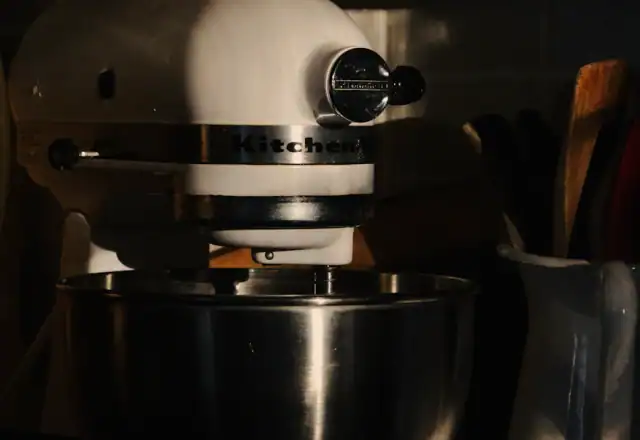
- Planetary or spiral mixers and their bowl capacity
- Proofing cabinets or controlled space for dough
- Dough sheeters, dividers and scales
- Cooling racks and trolleys sized to your trays
- Space for decorating and packing finished product
See ovens and baking equipment and mixers and dough equipment for details.
Scaling a bakery recipe from home to commercial ovens
Recipes that work at home often need adjustment at commercial scale. Commercial ovens run hotter and more evenly, so baking times and temperatures usually shift. Large mixers handle dough differently, and larger batches ferment faster because dough mass holds heat. Expect two or three test bakes before a recipe behaves consistently.
Record every change. Note the weights of each ingredient, dough temperature after mixing, fermentation times, oven settings, steam use and bake times. Weigh finished product to calculate yield. A single reliable formula, written in grams, is the foundation of a bakery that can grow without losing quality. Our guide to standardizing production recipes explains how.
Overnight and early-morning production
Fresh bread and pastries are best baked close to sale, so many bakers work through the night. If that is you, check access hours, security and parking at night, and lighting and heating or cooling in the space. Ask how many other tenants are typically in the kitchen overnight, and whether ovens are reserved by booking.
Schedule dough work around fermentation. A typical plan is to mix and shape late afternoon or evening, retard in refrigeration, then bake in the early morning. You may need refrigerated space for dough overnight, so confirm that storage as part of your plan.
Flour, ingredients and allergen management
Flour is an allergen and a fine dust that spreads through the air. In a shared bakery kitchen, clean surfaces and equipment carefully between users and store flour in sealed, labeled containers. Wheat, milk, eggs, nuts, soy and sesame are all major allergens that are common in baking, and every product must be labeled accordingly.
If you make gluten-free or nut-free products, discuss this with the operator in advance. Dedicated equipment, designated times or a private unit may be needed to avoid cross-contact. Read our guide on allergen management in a shared kitchen and the kitchen rules.
Dry storage and cooling space
Bakers use a lot of dry storage for flour, sugar, packaging and finished goods. Ask about shelf size, whether pallets can be stored and how pests are controlled. Cooling space matters too: hot bread needs time and airflow before it is packaged, and a lack of cooling racks can bottleneck production.
Plan your finished-product flow. Where do loaves cool, where are they packed and labeled, and how do they leave the kitchen? See dry storage and packaging area for what to look for.

Questions bakers should ask on a tour
- Which ovens are available at my hours, and how many trays do they hold?
- Is there steam injection, and can I reserve oven time?
- Where can dough rest, proof or retard overnight?
- How is flour dust controlled and cleaned between users?
- Can I store finished product until a morning pickup?
- How early can I arrive and how late can I stay?
Costs and choosing a format
Most bakers begin with a shared membership that includes oven access during a regular overnight window. As volume grows and scheduling becomes tight, a private kitchen gives you control over oven time and equipment layout.
Calculate cost per loaf or per tray. Add your hours, ingredient cost, packaging and rent to the number of units you can bake per session. This shows you whether your prices work and how many hours you need. See the pricing page and request a quote for plan options.
Getting started as a baker

- Define your product listList breads, pastries or cakes, with batch sizes, bake times and oven temperatures.
- Tour the kitchenTest the ovens, mixers and cooling space against your recipes.
- Prepare your documentsRegistration, food safety certificate, insurance and any bakery permit.
- Book your first sessionStart with a trial bake to measure timing and yield, then set a regular schedule.
Book a tour or read our guide to starting a bakery with a rented kitchen.
More on who uses a rented kitchen
This page is part of our who uses a rented kitchen guide. Follow the pathways below to move up to the overview, compare alongside topics or go deeper into the detail.
Start with the overview
- Commercial Kitchen RentalEverything you need to choose between shared, private, hourly, ghost and production…
- Pricing and Rental PlansA clear explanation of what you pay for, what changes the price and how to get a quote…
- How Renting WorksSix clear steps from first inquiry to your first confirmed session, with what to prepare…
Compare alongside
- Meal Prep Kitchen RentalHow meal prep and meal delivery businesses use a rented commercial kitchen: portioning…
- Catering Kitchen RentalEverything a catering business should check in a rented kitchen: batch capacity, holding…
- Kitchen Rental for Food TrucksHow food truck operators use a commercial kitchen as a commissary base: prep, storage…
- Kitchen Rental for Sandwich and Salad BusinessesCold prep benches, chilled storage and portioning space for sandwich, salad and grab-and-go…
Go deeper
- Ovens and Baking EquipmentA baker’s guide to ovens and baking equipment in a rented kitchen: oven types, tray sizes…
- Mixers and Dough EquipmentBatch capacity, attachments and training decide how much dough, batter and filling you can…
- Dry Ingredient and Packaging StorageWhat to know about dry storage in a rented kitchen: sizes, access, labeling, security, pest…
- Shared Kitchen RentalAllocated workstations, shared professional equipment and clear scheduling, the most…
Frequently asked questions
Straight answers to the questions food businesses ask most about bakery kitchen.
What ovens do rented bakery kitchens have?
Commonly convection ovens, and sometimes deck or rack ovens. Confirm models, capacity and availability at your hours.
Can I bake overnight in a rented kitchen?
Many kitchens offer overnight access. Our kitchens are open 24 hours, subject to your plan and agreement.
Can I sell bread I bake in a rented kitchen?
Generally yes with the right permits for retail or wholesale in your area.
How do I manage allergens when baking?
Declare allergens, label clearly, clean equipment between users and consider dedicated stations for allergen-free products.
Is there space to store flour and packaging?
Dry storage is commonly available as an add-on. Ask about shelf size and pest control.
Do I need my own baking pans and tools?
Often yes for pans, tins and specialty tools. Confirm what is provided during your tour.
Can I make wedding cakes in a rented kitchen?
Yes, provided you hold the permits your area requires for cakes and have refrigerated storage for fillings and finished cakes.
Get matched with a kitchen for your business
Share what you make and how often you cook. We check real kitchens and reply with options and prices.