Facilities and support
Preparation Workstations in a Shared Commercial Kitchen
Your workstation is where most of your session happens. Here is what to measure and ask before you rent one.
Free to inquire. We reply by email, usually within one business day.
A preparation workstation is the allocated stainless steel bench, nearby sink and utilities you use in a shared kitchen. Check bench length and depth, sink access, power outlets, storage within reach and whether the station is assigned or shared, then match it to your workflow, team size and equipment.
What a preparation workstation is
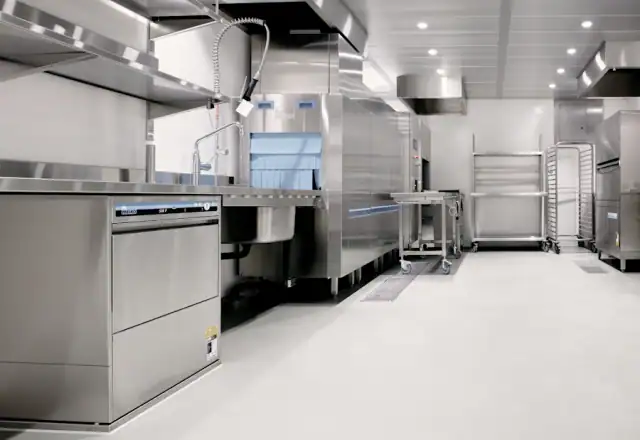
A preparation workstation is your base for chopping, mixing, portioning and assembling. In a shared kitchen it is usually a section of stainless steel bench with a shelf above or below, close to a sink and power. Good stations are cleanable, well lit and spaced so that neighbors do not crowd one another.
The best way to understand a station is to stand at it. Mimic your workflow with an imaginary batch and notice reach, elbow room, where you would put ingredients and where finished trays would go.
Bench dimensions and layout
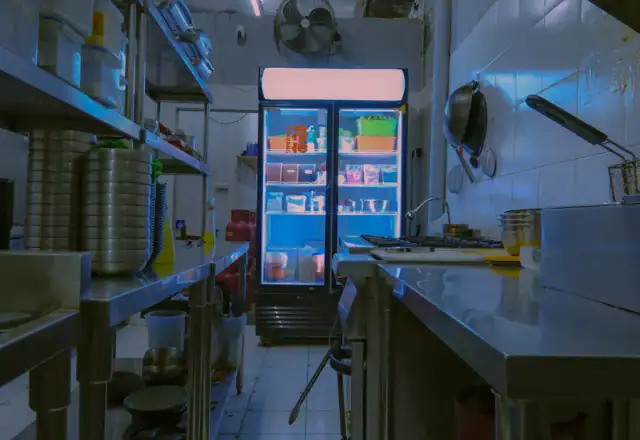
Bench length and depth decide how many trays and containers you can work with at once. A narrow bench forces you to stack, which slows work and raises contamination risk. Aim for enough length that raw, ready-to-eat and finished product can sit apart.
- Bench length per person, not per team
- Depth and height, especially for tall or short staff
- Shelving above and below for containers and tools
- Clear floor space for carts, bins and movement
Sinks, handwashing and water access
Every station needs handwashing within reach, separate from food-prep sinks and dishwashing. Check that handwashing sinks have soap, paper towels and hot water, and that prep sinks are large enough for produce and equipment. Long walks to a sink slow your session and lead to skipped washing.
See dishwashing and wash-up facilities for the rest of the cleaning chain, and the kitchen rules for hygiene standards.
Power, lighting and small equipment
Outlets near the bench let you run scales, blenders, slicers and tablets without extension leads across walkways. Check outlet capacity before plugging in heavy equipment, and ask whether you may bring your own small appliances. Bright, even lighting helps you see color, cleanliness and detail.
If your work needs a food processor, immersion blender or slicer, ask whether one is provided at the station or shared across the kitchen.
Designing an efficient station layout
Arrange your station so that ingredients flow in one direction: raw items on one side, preparation in the middle and finished product on the other. Keep tools you use constantly within arm’s reach, and put heavy items at waist height. Even small improvements in layout can save several minutes per batch, which adds up across a month of sessions.
Mark where things belong with tape or labels so that setup is quick and consistent. If you share a station, take a photo of the layout at the start of your session so you can restore it exactly at the end.
Working as a team at a shared station
When two or three people share a bench, assign roles so that raw and ready-to-eat tasks do not collide. Agree who washes, who portions and who cleans, and keep traffic routes clear. A short briefing at the start of each session prevents most collisions and spills.
If the team keeps outgrowing a station, consider booking adjacent stations or moving to a private kitchen.
Workstation mistakes that slow renters down
The most common mistake is bringing too much. Carrying everything you own to a shared station clutters the bench and wastes setup time. Bring only what the session needs, in labeled containers, and leave bulky items in storage. The second mistake is ignoring the walk: a station far from the cooler and sink can add many minutes to every batch, so choose the closest assigned position you can.
A third mistake is not sanitizing before you start. Previous users may have left residue, so wipe and sanitize every time. Finally, many renters never ask for feedback. Staff see how tenants work and can often suggest a better station, a better time or a layout that fits your product.
Small fixes pay back quickly. A rolling cart, a magnetic knife strip or color-coded boards can transform a crowded bench into an efficient one.
Assigned versus shared stations
| Model | How it works | Good for |
|---|---|---|
| Assigned station | The same bench for your shifts | Regular tenants with set routines |
| Shared pool | First available station at check-in | Occasional and hourly users |
| Private unit | Whole kitchen is yours | Teams that need control |
Assigned stations let you leave labels and tools in place. Shared pools are cheaper but need more setup time each session.
Hygiene, cleaning and sanitizing
Sanitize the bench before you start and again before you leave. Use color-coded boards and knives to keep raw and ready-to-eat foods apart, and never leave food on the bench between tasks. Wipe spills immediately and keep the floor around your station clear.
These habits protect your product and the next tenant’s. See cleaning vs sanitizing equipment for the difference between the two steps.
Workstation checklist for your tour
- How long and deep is the bench I would use?
- Is it assigned or shared, and can I leave tools there?
- Where are the nearest handwashing and prep sinks?
- Are outlets and lighting sufficient for my equipment?
- Where do raw and ready-to-eat foods go?
- How is the station cleaned between users?
Bring this list to your kitchen tour and mark each answer, then compare kitchens on the same terms.
Lighting, ergonomics and comfort
Long hours at a bench demand good ergonomics. Check bench height, floor matting and lighting, and ask whether adjustable stools or anti-fatigue mats are available. Poor ergonomics leads to injuries and slower work, which costs more than any equipment upgrade.
Bright, even lighting also helps you see cleanliness, color and portion size accurately, which affects both safety and quality.
More on equipment and facilities
This page is part of our equipment and facilities guide. Follow the pathways below to move up to the overview, compare alongside topics or go deeper into the detail.
Start with the overview
- Equipment and FacilitiesA practical checklist of the equipment, storage and support facilities that matter when you…
- Pricing and Rental PlansA clear explanation of what you pay for, what changes the price and how to get a quote…
- How Renting WorksSix clear steps from first inquiry to your first confirmed session, with what to prepare…
Compare alongside
- Food Packaging AreaA clean, organized packing area turns cooked food into a finished product. See what to look…
- Mixers and Dough EquipmentBatch capacity, attachments and training decide how much dough, batter and filling you can…
- Dishwashing and Wash-Up FacilitiesClean equipment is the foundation of food safety. Know what wash-up capacity to expect and…
- Cooking Line, Grills and FryersBurners, griddles, grills and fryers decide what you can cook and how fast. Here is how to…
Go deeper
- Shared Kitchen RentalAllocated workstations, shared professional equipment and clear scheduling, the most…
- Kitchen Rental for Sandwich and Salad BusinessesCold prep benches, chilled storage and portioning space for sandwich, salad and grab-and-go…
- Designing a Food Preparation WorkflowA good workflow moves product in one direction with no backtracking. Learn how to map and…
- Kitchen Rules and HygieneClear standards protect your food, your reputation and the other businesses using the…
Frequently asked questions
Straight answers to the questions food businesses ask most about preparation workstations.
How much bench space do I need?
It depends on batch size and team. Count the trays and containers you use at once and plan space for each, plus a clear area for finished product.
Can I leave tools at my station?
At an assigned station often yes. At a shared station you usually carry tools in and out.
Who supplies cutting boards and knives?
Policies vary. Many renters bring their own knives, and kitchens supply boards and basic tools.
Do stations have handwashing sinks?
They should be within reach. Confirm location and supplies on your tour.
Can I work in a team at one station?
Yes if the bench is long enough. Ask the maximum number per station.
What if my station is dirty on arrival?
Tell staff immediately and photograph it. Do not start until it is cleaned.
Can I request a specific workstation?
Often yes for regular tenants. Ask whether stations can be reserved by name or position.
Are benches height adjustable?
Usually fixed. Ask about mats or platforms if height is an issue.
See the kitchen and equipment in person
Tell us what you cook and which equipment matters. We confirm a viewing time by email.