Who uses the kitchen
Catering Kitchen Rental for Event Food Businesses
Everything a catering business should check in a rented kitchen: batch capacity, holding, chilled storage, loading access and event-day scheduling.
Free to inquire. We reply by email, usually within one business day.
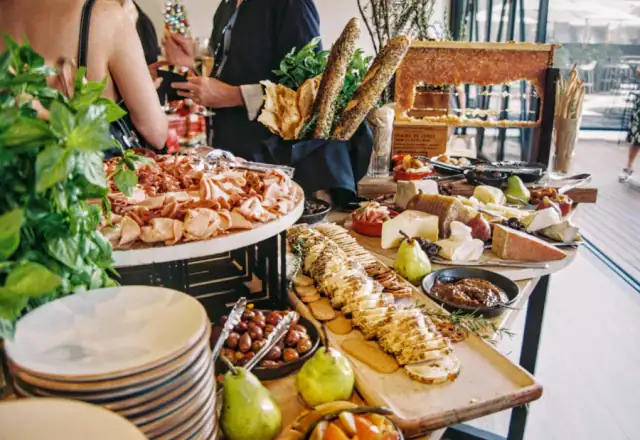
Catering kitchen rental gives event caterers licensed space to prepare food in volume without owning a restaurant. Caterers rent by the day, week or month, using ovens, ranges, chilled storage and loading access for batch preparation, hot and cold holding and transport, and book more time in busy event seasons.
Why caterers rent commercial kitchens
Catering demand is uneven. A caterer might cook for a hundred guests on Saturday, nothing on Monday and for three events the following weekend. Owning a full commercial kitchen means paying for that space every day, even when it sits idle. Renting converts that fixed cost into a cost that follows your bookings, which makes growth far less risky.
Home kitchens and church halls also run into limits. Many local rules require catered food to be prepared in a licensed facility, and ordinary home equipment cannot keep up with large events. A rented commercial kitchen gives you the capacity, the licensing and the refrigeration to take on bigger contracts with confidence.

Batch preparation and workflow
Event cooking is batch cooking. You prepare large quantities of a limited menu, often over two or three days, then pack and transport it. Plan your workflow in stages: receive and store ingredients, prep and cook, cool and chill, pack and label, then load for delivery. Each stage should have its own space so raw and cooked products never cross.
A useful habit is to build a prep timeline backward from the event. Decide what must be cooked fresh on the day, what can be made the day before and what keeps for several days. Book kitchen time to match, and keep the heaviest, slowest tasks for the largest blocks. See the guide on planning a batch production schedule.
Equipment caterers should look for
Caterers benefit from scale and flexibility. Look for large ovens or combi ovens for roasting, ranges and steam kettles for sauces and stocks, plus plenty of prep table space. Reliable hot and cold holding equipment is vital because food often waits between cooking and service.

- Combi or convection ovens with multiple racks
- Steam kettles, tilt skillets and large pots
- Hot holding cabinets and insulated carriers
- Walk-in refrigeration and blast chilling for safe cooling
- Stainless prep tables, slicers and food processors
- Packing tables, labels and portion scales
Confirm availability at the times you need them, especially before weekends. The equipment and facilities page lists what to ask.
Chilled storage, cooling and transport
Food safety for caterers is mostly about temperature. Cooked food must cool from 135°F to 70°F within two hours and to 41°F within a further four. Cold food stays at or below 41°F and hot food at or above 135°F until it is served. Without enough refrigeration and cooling capacity, large events cannot be done safely.
Transport adds risk. Use insulated carriers and ice packs or heated boxes, keep a probe thermometer in every load and record temperatures at loading and on arrival. Ask whether the kitchen can store event orders overnight and whether a refrigerated van can load at the dock. See refrigerated storage and loading and deliveries.
A pre-event kitchen checklist for caterers
- Confirm menu, final guest numbers and dietary requirements
- Book prep days and storage for finished food
- Order ingredients to arrive when refrigeration is free
- Check equipment availability, including hot holding
- Prepare labels, allergen cards and temperature logs
- Plan loading time, route and a backup for critical items
Running through the same checklist before every event builds consistency and cuts the risk of last-minute surprises.
Loading access and logistics
The best kitchen in the world is unhelpful if you cannot get a van near the door. Check parking, loading hours, door height and distance from the packing area to your vehicle. If your events start early, make sure you can load before sunrise without disturbing neighbors, and that access is available when you finish late.
Plan the day of the event as carefully as the cooking. Build a loading list, assign a person to check every item and keep a spare of anything critical, such as serving utensils or chafing fuel. A smooth loading process reduces stress and prevents costly forgotten items.
Permits and insurance for caterers
Caterers usually need more than a business registration. Many jurisdictions require a catering or food service license, a food manager certificate and sometimes a temporary event permit for each event. Insurance should cover general liability and product liability, and you may need liquor liability if you serve alcohol.
Ask your local health department which permits apply to your type of catering, such as drop-off, buffet or plated service. Share these details with us during onboarding. The rental requirements page lists the documents we check.
How to get started as a catering tenant
- List your next three eventsNote menu, guest numbers, prep days and equipment needs for each.
- Tour the kitchenCheck holding equipment, chilled storage, loading access and parking.
- Prepare your documentsRegistration, food manager certificate, insurance and catering permit.
- Book your prep daysReserve sessions before each event and confirm storage for finished food.
When you are ready, book a tour or send us your event schedule through the quote form.
Costs and choosing a format
Small and occasional caterers often start with hourly rental, which keeps cost proportional to events. As volume grows, a shared membership with regular prep days lowers the effective hourly cost and includes storage. Large caterers and those with several events a week may need a production kitchen.
Estimate your cost by event: hours of prep, storage days and any special equipment, divided by the number of guests. This shows you the true kitchen cost per head, which you can then build into your pricing. See the pricing page and request a quote to compare plans.

More on who uses a rented kitchen
This page is part of our who uses a rented kitchen guide. Follow the pathways below to move up to the overview, compare alongside topics or go deeper into the detail.
Start with the overview
- Commercial Kitchen RentalEverything you need to choose between shared, private, hourly, ghost and production…
- Pricing and Rental PlansA clear explanation of what you pay for, what changes the price and how to get a quote…
- How Renting WorksSix clear steps from first inquiry to your first confirmed session, with what to prepare…
Compare alongside
- Bakery KitchenWhat bakers need from a rented commercial kitchen: oven capacity, mixers, proofing, cooling…
- Kitchen Rental for Sandwich and Salad BusinessesCold prep benches, chilled storage and portioning space for sandwich, salad and grab-and-go…
- Meal Prep Kitchen RentalHow meal prep and meal delivery businesses use a rented commercial kitchen: portioning…
- Ice Cream KitchenFreezing, churning and cold storage for ice cream and frozen dessert makers, plus the dairy…
Go deeper
- Central Production Kitchen RentalBulk production space with the throughput, cooling and storage to support volume cooking…
- Hourly Kitchen RentalBook professional kitchen time by the hour for trials, events and irregular production, and…
- Refrigerated StorageHow chilled storage works in a rented kitchen: capacity, allocation, temperature…
- Goods Receiving and Loading AccessIngredients in, finished product out: loading access is as important as any oven. Know what…
Frequently asked questions
Straight answers to the questions food businesses ask most about catering kitchen rental.
Can I use a rented commercial kitchen for catering events?
Yes. Many caterers prepare event food in a rented commercial kitchen, provided they hold the catering permits their area requires.
Do I need a catering license?
Many states and counties require a catering or food service license. Check with your local health department, as rules vary.
Can I store prepared food overnight?
Often yes in allocated refrigerated or frozen space, subject to labeling and time limits. Ask about overnight storage during your tour.
How much kitchen time do I need for an event?
Plan prep, cooking, cooling, packing and clean-down. A 100-guest event can take a full day or more, depending on the menu.
Can I park a catering van at the kitchen?
Many kitchens offer loading access and short-stay parking. Confirm duration limits and vehicle size.
What if I have two events in one weekend?
Book blocks in advance and consider a short-term or production plan for peak weekends to avoid scheduling conflicts.
Can several caterers share the same kitchen?
Yes. Scheduling, labeled storage and clean-down rules keep shared use organized, and busy seasons can be planned with advance bookings.
Get matched with a kitchen for your business
Share what you make and how often you cook. We check real kitchens and reply with options and prices.