Facilities and support
Cooking Line, Grills and Fryers in a Rented Kitchen
Burners, griddles, grills and fryers decide what you can cook and how fast. Here is how to judge a rented cooking line before you book.
Free to inquire. We reply by email, usually within one business day.
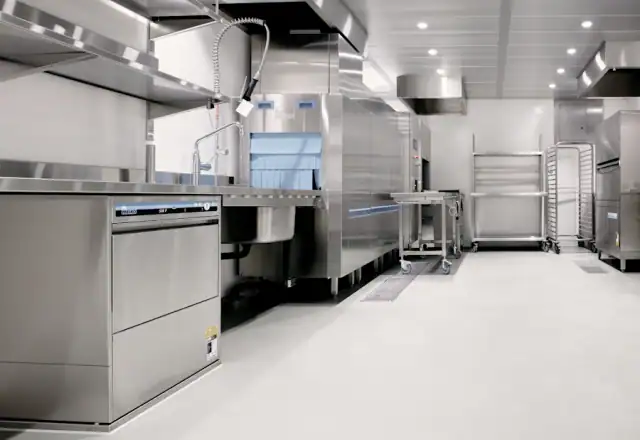
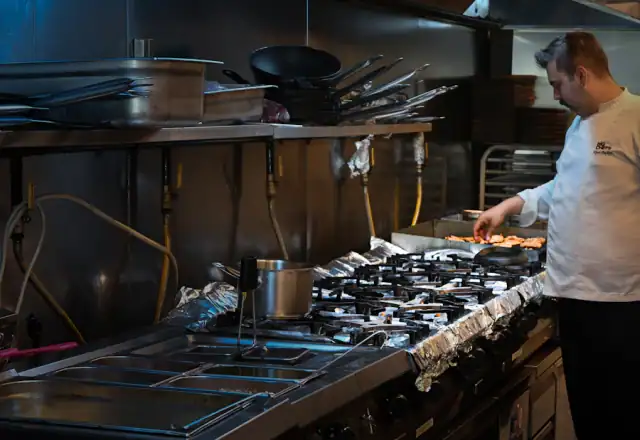
A rented cooking line is the row of ranges, griddles, grills and fryers under an extraction hood. Check the number of burners and fryer baskets you can use at once, usable surface and capacity, gas or electric supply, ventilation rating, fire suppression and how shared access is scheduled so your hot production runs on time.
Why the cooking line shapes your rental
Most hot food businesses live or die by the cooking line. A bakery can survive with a single oven, but a caterer, ghost kitchen or meal prep brand needs enough burners, grill space and fryer capacity to cook in volume within a booked session. Two kitchens with the same hourly rate can differ enormously in what you can actually produce.
Treat the cooking line like a production budget. Write down the heat sources your menu needs at its busiest moment, such as four burners, one griddle and a fryer, then check that those items can be used together during your slot, not just that they exist somewhere in the building.
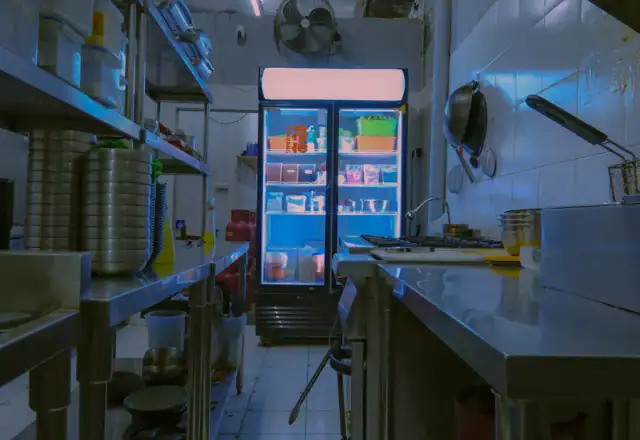
Ranges and burners
Commercial ranges use gas or electric burners with far more output than domestic hobs, so pots reach temperature quickly and hold it under load. Count the burners you can use, check their size, and ask whether heavy stockpots, woks and tilt skillets are available for larger batches. Open burners and flat-top sections suit different jobs, and mixed ranges give flexibility.
- Number and size of burners available to you at the same time
- Gas or electric supply and any local restrictions on gas
- Availability of stockpots, steam kettles and tilt skillets
- Standing pilot lights and who is responsible for shutting equipment down
Griddles, grills and char-broilers
Flat-top griddles are used for breakfasts, smash burgers, flatbreads and searing, and charbroilers add grill marks and smoke flavor. Check usable surface in inches, heat zones, how grease is collected and whether you must clean the surface before you leave. Grease-producing equipment must sit under a rated hood, so confirm which appliances are permitted for your menu.
If your product relies on a specific cooking method, ask to see that equipment running. Uneven heat, sticking surfaces and weak extraction are easier to spot in person than on a specification sheet.
Cleaning and maintaining shared cooking equipment
Cooking equipment runs hard and picks up grease, carbon and spills. Clean flat-tops while warm, scrape and oil as directed, empty drip trays and wipe burners. Never leave grease on surfaces, where it can ignite and attract pests. Follow the operator’s cleaning list rather than your own habits.
Report any fault, such as a pilot that will not light or a fryer that overheats, immediately. Do not use faulty equipment, and leave a clear note for the next user.
Planning a menu around the equipment you can use
Start from the plate and work backward. Each dish uses specific heat sources for specific minutes, so list them for your busiest hour and check that they never exceed what you can use at once. A short menu that shares equipment cooks faster and wastes less than a long menu that needs every appliance at the same moment.
Test your timings in a trial session. A sauce that simmers for two hours can occupy a burner you need for sautéing, so move long cooks to a quiet window or to another piece of equipment, such as a steam kettle.
Fryers and oil management
A commercial deep fryer is measured in oil capacity and recovery time, which is how quickly it returns to temperature after a load. Larger fryers make better batches but need careful oil handling. Ask how oil is filtered, who changes it, where waste oil goes and whether the fryer is shared or reserved for your allergen-controlled products.
Waste oil management is a real operating cost. A kitchen with a proper oil disposal program and clear rules protects drains and neighbors, and it is a sign of a well-run site. See managing cooking oil and kitchen waste for practical habits.
Ventilation, extraction and fire suppression
The hood above the line is not optional equipment. Type I hoods remove heat, grease and smoke, and an automatic fire suppression system protects the whole kitchen. Poor extraction makes the space hot, greasy and unsafe, and it limits what you are allowed to cook. Ask how often hoods and ducts are cleaned and when the suppression system was last inspected.
Know where the manual fire pull station, extinguishers and emergency gas shut-off are before you light anything. Your induction should show you each one, and you should be able to find them without help during a busy session.
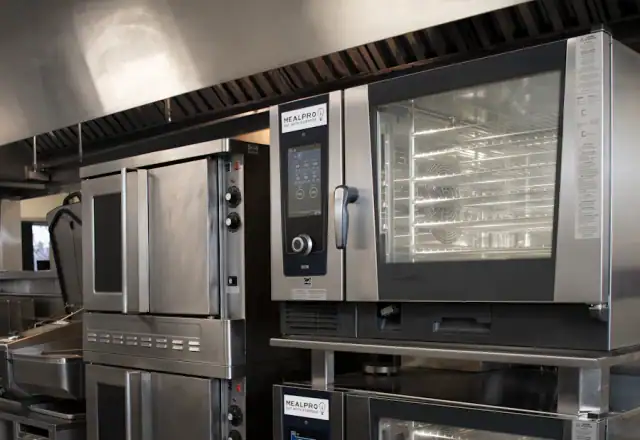
Cooking line checklist for your tour
- How many burners, griddle sections and fryer baskets can I use together?
- Is the supply gas or electric, and are there any restrictions?
- What is the oil capacity and recovery time of the fryers?
- When were hoods and fire suppression last serviced?
- How is equipment booked and what are the cleaning rules?
- Who repairs faults and how quickly?
Bring this list to your kitchen tour and mark each answer, then compare kitchens on the same terms.
If your needs are unusual, such as very high-volume frying or specialty cooking, say so early. The right answer may be a private kitchen or a production kitchen with dedicated equipment.
More on equipment and facilities
This page is part of our equipment and facilities guide. Follow the pathways below to move up to the overview, compare alongside topics or go deeper into the detail.
Start with the overview
- Equipment and FacilitiesA practical checklist of the equipment, storage and support facilities that matter when you…
- Pricing and Rental PlansA clear explanation of what you pay for, what changes the price and how to get a quote…
- How Renting WorksSix clear steps from first inquiry to your first confirmed session, with what to prepare…
Compare alongside
- Mixers and Dough EquipmentBatch capacity, attachments and training decide how much dough, batter and filling you can…
- Ovens and Baking EquipmentA baker’s guide to ovens and baking equipment in a rented kitchen: oven types, tray sizes…
- Preparation WorkstationsYour workstation is where most of your session happens. Here is what to measure and ask…
- Freezer StorageHow freezer storage works in a rented kitchen: capacity, allocation, access, temperature…
Go deeper
- Kitchen Rules and HygieneClear standards protect your food, your reputation and the other businesses using the…
- Cloud, Dark and Ghost Kitchen RentalDelivery-first kitchen space with rider collection and dispatch support, for brands that…
- Managing Cooking Oil and Kitchen WasteOil and waste are easy to ignore until a drain blocks. Learn the habits that keep the…
- Questions to Ask on a Kitchen TourA tour is your best chance to judge a kitchen. Bring this checklist so you leave with the…
Frequently asked questions
Straight answers to the questions food businesses ask most about cooking line, grills and fryers.
How many burners do I need?
Count the burners your menu uses at its busiest moment and add one spare. That number is what you should be able to use at the same time during your slot.
Can I use my own fryer?
Sometimes, with the operator’s written approval. Fryers need ventilation, power and fire safety that the building must support.
Who cleans the grill and griddle?
You clean equipment after your session to the standard in the kitchen rules. Hood and duct cleaning is normally handled by the operator.
Is gas or electric better?
Gas gives instant heat control for many cooks, while electric suits some baking and induction work. Choose what your recipes were developed on.
What if the line is busy?
Ask how bookings reserve equipment. Good kitchens schedule it so your session is not blocked.
Can I do high-volume frying in a shared kitchen?
Often yes, subject to fryer capacity and oil rules. Very high volumes are usually better suited to a private or production unit.
Can I bring my own pans and woks?
Yes, and most cooks do. Check that they suit the burners and are safe to use.
See the kitchen and equipment in person
Tell us what you cook and which equipment matters. We confirm a viewing time by email.