Who uses the kitchen
Kitchen Rental for Personal Chefs and Private Chefs
Flexible commercial kitchen time for personal and private chefs who prepare client meals off-site and need space, storage and a compliant base.
Free to inquire. We reply by email, usually within one business day.

Personal chefs rent commercial kitchens to prepare client meals in a licensed, professional space, then pack and deliver or finish them at the client’s home. Hourly or shared rental gives flexible access, equipment and storage without a lease, and helps chefs meet local rules on where client food can be prepared.
Why personal chefs rent a commercial kitchen
A personal chef cooks for private clients, often preparing several meals in advance for a household, or cooking in the client’s home. Many chefs work from their own kitchens, but home kitchens can limit capacity, create cross-contamination concerns and, in many places, fall outside what regulation allows for business use.
Renting a licensed commercial kitchen gives chefs room to work, equipment that handles volume and a compliant place to prepare and store client food. It also looks more professional: chefs can invite clients to see a clean, organized workspace and can scale from a handful of clients to dozens without outgrowing their kitchen.

Small-batch preparation for several clients
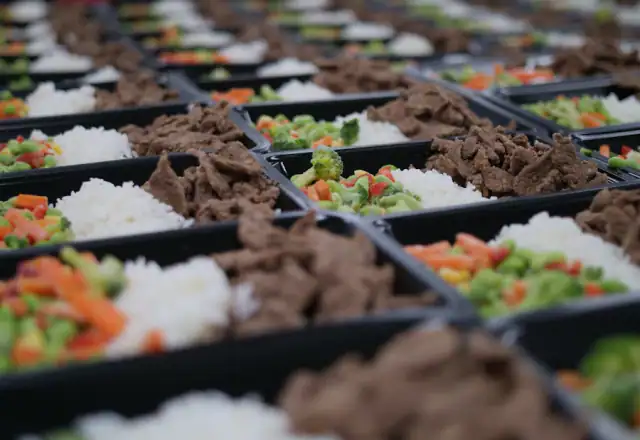
The core of personal chef work is producing small batches for different clients, each with unique preferences, allergies and portions. This calls for organization more than size. A good workflow separates each client’s food from preparation to packing, uses clear labels and avoids mixing allergens.
- Use color-coded containers or labels for each client
- Keep a master sheet of dietary needs and allergens for every client
- Prepare shared components in bulk, then portion for each client
- Cool, pack and label immediately to keep food safe
- Record preparation dates for reheating guidance
Our meal prep page describes similar batch workflows at larger scale.
Flexible access and scheduling
Personal chefs work around clients, not around a fixed shift. One week may need two long prep days, another may need a few short sessions, and busy periods such as holidays can double the load. Hourly booking or a flexible part-time membership lets you shape your kitchen time to your client calendar.
Look for slots that suit your pattern, such as early mornings before client deliveries or evenings after shopping. Ask how far in advance you can book, how easily you can change a booking and whether you can leave ingredients in storage between sessions.

Packing, labeling and delivery
Once meals are cooked, they must be cooled, packed and labeled for delivery or pickup. Good packaging protects quality and safety, and clear labels tell clients what the meal is, what allergens it contains and how to store and reheat it. Keep a stock of containers, labels and bags, and set up a clean, tidy packing area.
If you deliver by car, use insulated bags and cold packs, and keep a probe thermometer in the vehicle. Follow safe temperature rules at every stage. See packaging area for what to look for in a kitchen.
A weekly workflow for a personal chef
A personal chef who serves ten clients can organize the week into predictable blocks. Early in the week, confirm menus and dietary notes, order ingredients and plan deliveries. Midweek, book a long prep session to shop, prep, cook and cool. Later, pack, label and deliver, then clean and restock.
Keep each client’s order separate from preparation to packing, and double-check labels before delivery. A simple spreadsheet listing client, meals, allergens, portions and delivery time prevents mistakes and makes it easier to take on new clients without losing quality.
Permits, insurance and client trust
Rules for personal chefs vary. Some states and counties treat them like caterers and require a food service license or permit, while others have lighter rules for in-home cooking but stricter rules for food prepared elsewhere and delivered. Check with your local health department which applies to you.
Insurance is essential. Liability cover protects you if a client becomes ill or property is damaged, and operators will require it. Clients also trust chefs with allergen information, so keep careful records and train anyone who helps you. The rental requirements list what we need.
Building a reliable client base as a personal chef
Clients choose personal chefs for trust as much as food. Be clear about what you offer, how you handle allergies, how you price and how you communicate. A short written agreement covering menus, ingredients, cancellation and payment avoids misunderstandings and signals professionalism.
Consistency builds your reputation. Deliver on time, label every meal clearly and follow up after the first week to ask what to change. Happy clients refer friends, and a rented commercial kitchen gives you the capacity to say yes when they do.
Costs and choosing a plan
Most personal chefs begin with hourly rental, booking sessions when they have orders. As client numbers grow and weekly hours become predictable, a shared membership typically costs less per hour and includes storage.
Work out your cost per client: kitchen hours, ingredients, packaging, travel and your own time. If your kitchen cost per client is too high, look at batching more efficiently or increasing the number of clients per session. See the pricing page and request a quote.
Growing from personal chef to a food business
Many personal chefs add products such as meal subscriptions, small catering or packaged foods. A rented kitchen supports that growth: you can add hours, storage and equipment without moving. Standardize your recipes and processes so that other cooks can follow them, and use tools such as costing sheets and inventory logs.
When you are ready to scale, read our guides on recipe costing and scaling from small batches to larger production.

Mistakes that cost personal chefs money
- Underpricing without counting kitchen time, travel and packaging
- Cooking each client’s order separately instead of batching components
- Skipping written agreements about allergies and cancellations
- Letting storage fill with leftovers and expired items
- Forgetting to track food costs per client each month
Tracking these basics turns a good cook into a sustainable business.
More on who uses a rented kitchen
This page is part of our who uses a rented kitchen guide. Follow the pathways below to move up to the overview, compare alongside topics or go deeper into the detail.
Start with the overview
- Commercial Kitchen RentalEverything you need to choose between shared, private, hourly, ghost and production…
- Pricing and Rental PlansA clear explanation of what you pay for, what changes the price and how to get a quote…
- How Renting WorksSix clear steps from first inquiry to your first confirmed session, with what to prepare…
Compare alongside
- Kitchen Rental for ChocolatiersWhat chocolatiers need from a rented kitchen: temperature control, tempering equipment…
- Pop-Up Kitchen RentalShort-term kitchen space for pop-up restaurants and menu trials, with advice on service…
- Kitchen Rental for Confectionery MakersSafe hot-sugar processing, molding space and dry storage for candy makers and sweet brands…
- Kitchen Rental for Street Food VendorsPrep space, portable-kit storage and early-morning access for street food vendors working…
Go deeper
- Hourly Kitchen RentalBook professional kitchen time by the hour for trials, events and irregular production, and…
- Meal Prep Kitchen RentalHow meal prep and meal delivery businesses use a rented commercial kitchen: portioning…
- Shared Kitchen RentalAllocated workstations, shared professional equipment and clear scheduling, the most…
- Kitchen Rental for Food StartupsA practical plan for launching a food business with a rented kitchen: entry plans, trials…
Frequently asked questions
Straight answers to the questions food businesses ask most about kitchen rental for personal chefs.
Do personal chefs need a commercial kitchen?
It depends on local rules and how you work. Many jurisdictions require food sold or delivered to clients to be prepared in a licensed facility.
Can I use a commercial kitchen for a few clients?
Yes. Hourly rental is designed for small, flexible workloads.
Do I need a permit as a personal chef?
Possibly. Requirements vary by location, so check with your local health department.
Can I store client food in the kitchen?
Often yes in labeled, allocated refrigerated space for short periods. Ask about time limits.
How do I manage client allergies?
Keep a record for each client, use dedicated tools and clean thoroughly between orders, and label allergens clearly.
Can I cook at the client’s home instead?
Yes, but check local rules on what can be prepared in advance elsewhere and how food is transported.
Should I rent monthly or hourly as a personal chef?
Start hourly while client numbers are small and move to a membership once you consistently book the same hours each week.
Get matched with a kitchen for your business
Share what you make and how often you cook. We check real kitchens and reply with options and prices.