Facilities and support
Freezer Storage for Commercial Kitchen Tenants
How freezer storage works in a rented kitchen: capacity, allocation, access, temperature control and the rules for storing frozen product.
Free to inquire. We reply by email, usually within one business day.
Freezer storage in a commercial kitchen keeps frozen ingredients and finished product at 0°F or below in walk-in or reach-in freezers. Ask about capacity and allocation, access hours, temperature monitoring, labeling rules and charges, and plan storage for ice cream, frozen meals, baked goods dough and bulk proteins with shelf-life and thawing practices in mind.
Why freezer storage matters
Freezing extends shelf life, reduces waste and lets you produce in larger batches. Many food businesses rely on it: ice cream makers harden and store product, bakers freeze dough, meal prep companies freeze portions, and caterers hold bulk proteins. Freezer space gives you the freedom to plan production around your schedule instead of the calendar of your orders.
It also supports growth. When you can store frozen stock, you can buy ingredients at better prices, produce ahead of peak periods and ship frozen products to customers. In a rented kitchen, access to reliable freezer space is often a deciding factor, so check it carefully.

Types of freezer storage
Operators typically provide freezer space in a few forms. A walk-in freezer is a large room-sized unit that can be shared by shelf or rack. Reach-in freezers are smaller and often dedicated to a tenant. Chest freezers offer low-cost bulk storage but can be hard to organize.
- Walk-in freezerhigh capacity, shelves or racks allocated by tenant
- Reach-in freezersmaller capacity, easier to keep organized
- Chest freezergood for bulk, harder to rotate
- Blast freezerrapidly freezes product to preserve quality
- Dedicated unita freezer reserved for one tenant
Ask which type you would use and how much space it provides.
Temperature, monitoring and power
Frozen food should be held at 0°F or below. Higher temperatures lead to quality loss and, over time, safety issues. Check that the freezer has an accurate thermometer, regular temperature logs and an alarm for failures. Keep your own thermometer in your area if you store valuable product.
Ask about power cuts and equipment breakdowns. A good operator has an emergency plan, such as backup power or a contract for emergency freezer rental. Know who is responsible for lost stock, and consider insurance cover for spoilage. Do not overload the freezer, because airflow matters.
Packing, wrapping and labeling for the freezer
Proper packing protects quality. Wrap food tightly or use airtight containers to prevent freezer burn and absorb no odors. Remove as much air as possible, and leave room for expansion with liquids. Use containers that are rated for freezing.
Label every item with the product name, your business name, the freeze date and a use-by date. Use waterproof labels or markers that survive cold and condensation. Keep an inventory so you can find items quickly and rotate stock. Read ingredient inventory and stock rotation.
Freezing and thawing safely
Freeze food as quickly as possible after cooling. Small portions freeze faster and preserve texture better than large blocks. Cool hot food to safe temperatures before freezing, and do not put large volumes of warm food into a freezer that is full, because it can raise the temperature for other tenants.
Thaw food safely: in a refrigerator at or below 41°F, under cold running water in a way that keeps it out of the danger zone, or as part of cooking. Never thaw at room temperature. Once thawed, use quickly, and do not refreeze unless it has been cooked. See our kitchen rules for temperature standards.
What to ask on your tour about the freezer
- How cold does the freezer run, and is it logged?
- What shelf or rack space can I use, and can I reserve it?
- Is there a blast freezer for rapid hardening of product?
- What is the backup plan if the freezer fails?
- Can I access my product outside normal hours?
- How are items labeled, dated and kept separate from other tenants?
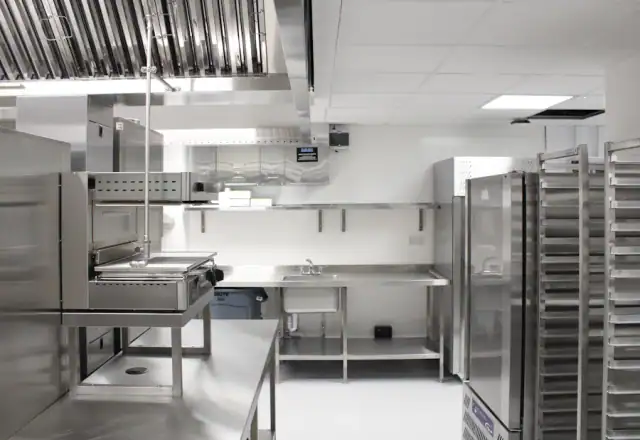
Check the freezer’s condition on your visit. Heavy frost, damaged seals or items stacked without labels are signs that maintenance may be lacking. A freezer that is carefully organized and clean usually means the whole kitchen is well run.
Capacity planning and cold chain
Work out how much freezer space you need by counting the containers you hold at peak. Include finished product, ingredients and dough, and add a buffer for busy periods. Convert containers into shelves or rack positions and ask for that capacity at your busiest times.
If you ship frozen product, plan the cold chain from freezer to customer. Use insulated packaging with dry ice or frozen gel, and check carrier timing so product stays frozen. Ask about collection windows and whether product can be held in the freezer until pickup.
Avoiding freezer burn and quality loss
Freezer burn happens when food loses moisture and reacts with air. It does not make food unsafe, but it damages taste and texture. Prevent it by wrapping tightly, using airtight containers, removing air and keeping temperatures stable at 0°F or below.
Do not leave freezer doors open longer than needed, and avoid repeatedly moving product in and out. Use small portions that you can thaw at once, and rotate stock so older items are used first. Good freezing habits protect both quality and profits.
Who needs freezer storage most
| Business | What they freeze |
|---|---|
| Ice cream makers | Hardened ice cream and mix-ins |
| Meal prep companies | Frozen portions and sauces |
| Bakers | Dough, pastry and finished goods |
| Caterers | Bulk proteins and event prep |
| Packaged food brands | Frozen retail products |
Access, security and charges
Check access hours and security for the freezer, because you may need to collect product at unusual times. Ask whether it is locked, who has keys and how deliveries are put away. If product is valuable, ask about lockable cages or a dedicated unit.
Freezers use more energy than other storage, so charges are usually higher than dry storage. Ask how space is priced and whether there are extra fees for exceeding your allocation. See the pricing page and request a quote, or book a tour to inspect the freezers yourself.
More on equipment and facilities
This page is part of our equipment and facilities guide. Follow the pathways below to move up to the overview, compare alongside topics or go deeper into the detail.
Start with the overview
- Equipment and FacilitiesA practical checklist of the equipment, storage and support facilities that matter when you…
- Pricing and Rental PlansA clear explanation of what you pay for, what changes the price and how to get a quote…
- How Renting WorksSix clear steps from first inquiry to your first confirmed session, with what to prepare…
Compare alongside
- Ovens and Baking EquipmentA baker’s guide to ovens and baking equipment in a rented kitchen: oven types, tray sizes…
- Refrigerated StorageHow chilled storage works in a rented kitchen: capacity, allocation, temperature…
- Cooking Line, Grills and FryersBurners, griddles, grills and fryers decide what you can cook and how fast. Here is how to…
- Dry Ingredient and Packaging StorageWhat to know about dry storage in a rented kitchen: sizes, access, labeling, security, pest…
Go deeper
- Ice Cream KitchenFreezing, churning and cold storage for ice cream and frozen dessert makers, plus the dairy…
- Meal Prep Kitchen RentalHow meal prep and meal delivery businesses use a rented commercial kitchen: portioning…
- Ingredient Inventory and Stock RotationKnowing what you have, and using the oldest first, saves money and keeps food safe. Here is…
- Request a Rental QuoteTell us about your production and get a clear, written quote built around your hours…
Frequently asked questions
Straight answers to the questions food businesses ask most about freezer storage.
What temperature should a commercial freezer be?
At or below 0°F.
How long can I store frozen product?
It depends on the product and packaging. Many foods keep for months, but quality declines over time, so label dates and test shelf life.
Can I store product in a shared freezer?
Yes, in allocated, labeled space. Ask about capacity and time limits.
What happens if the freezer fails?
Ask about alarms, backup plans and responsibility for lost stock, and check your own insurance.
Can I refreeze thawed food?
Generally not unless it has been cooked. Follow safe thawing practices.
Can I get a dedicated freezer?
Sometimes for an additional fee. Ask about reserved units.
How much does freezer space usually cost?
Freezer space is usually priced above dry storage because of energy use. Ask for a written price by shelf or rack and compare quotes.
See the kitchen and equipment in person
Tell us what you cook and which equipment matters. We confirm a viewing time by email.