
Who uses the kitchen
Kitchen Rental for Small Food Manufacturers
Repeatable production, batch control and dispatch for growing food manufacturers who have outgrown a startup kitchen but are not ready to build a factory.
Free to inquire. We reply by email, usually within one business day.
Small food manufacturers rent commercial or production kitchens to run repeatable, documented production for retail and wholesale. Choose a kitchen with the capacity for your batches, quality and traceability systems, loading access and storage, and plan compliance with food safety rules, labeling and buyer audits before you scale.
Why small manufacturers rent production space
Moving from a startup kitchen to a factory is a huge step, and most small food brands are not ready. Building or leasing a manufacturing facility can mean heavy equipment, utilities, inspections and staff before sales justify it. Renting production-scale kitchen space gives you the capacity to serve larger customers while keeping capital free for growth.
It also reduces risk. You can test demand, learn what it takes to run production at scale and prove your processes before committing to a factory. Many brands rent for years, adding hours and storage as they grow, and only move to their own site when volume is stable.
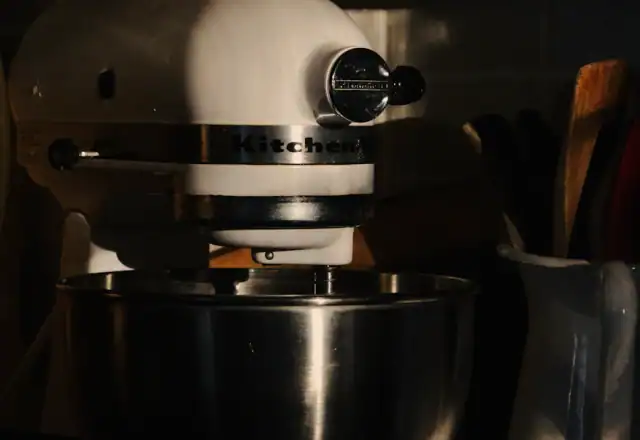
Repeatable production runs
Manufacturing is about repeatability. The same recipe must produce the same product every time, whoever is cooking. That requires written processes, accurate measuring, trained staff and a kitchen that lets you run your process in the same way each time.
- Document each recipe in weights, times and temperatures
- Standardize equipment settings and batch sizes
- Train staff and record who made each batch
- Check quality at critical points and record results
- Review results and refine the process regularly
Our guide to planning a batch production schedule and standardizing production recipes will help.
Capacity, throughput and equipment
Capacity is the maximum amount you can produce in a given time. It depends on equipment size, process speed, labor and the slowest step, which is often cooling, packing or cleaning. Map your process end to end, time each step and find the bottleneck. Then check the kitchen can support the capacity you need.
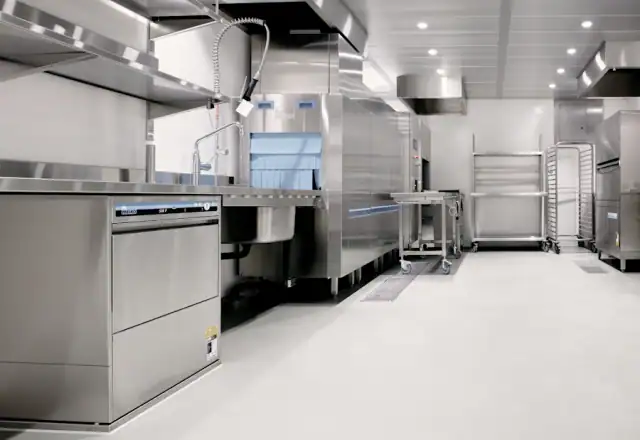
Look for equipment suited to volume: large kettles, tilt skillets, mixers, ovens, fryers, blast chillers and packing lines. Ask about scheduling so your production day is not interrupted. See equipment and facilities and production kitchen rental.

Common mistakes when scaling manufacturing
The most expensive mistake is scaling a recipe that has not been standardized. A formula written in cups and pinches cannot be repeated reliably at fifty times the size. Convert to weights, test at full batch and document the process before you take on large orders.
- Taking a large order before testing capacity and cooling time
- Ignoring packaging lead times, which can stall production for weeks
- Skipping batch codes and records until a problem occurs
- Underpricing and discovering margins only after the first invoices
- Relying on a single supplier with no backup for key ingredients
Planning for these risks early keeps growth profitable and your reputation intact.
Quality control and traceability
Buyers expect proof of control. A basic quality system includes written specifications, in-process checks, finished product checks and records. Traceability is essential: every product should carry a batch code that links to the ingredients, date, staff and equipment used.
If an issue arises, traceability lets you identify and recall affected product quickly and limit damage. Keep records of suppliers and deliveries too. Read about batch coding and traceability and preparing a recall plan.
Compliance, certification and buyer audits
Manufacturers face more rules than restaurants. You may need facility registration, a documented food safety plan based on HACCP, compliant labeling and, for larger buyers, third-party certification. Retailers and distributors often audit suppliers, so be ready to show documents and records.
Ask the operator what documentation it can supply and whether it has hosted buyer audits before. A kitchen that already operates to a high standard makes your own compliance easier. Review our rental requirements and check with the FDA and local authorities which rules apply to you.
A simple scale-up timeline
Think of scaling as stages. In stage one you refine the recipe and measure yields. In stage two you run a pilot batch at the target size and check quality and shelf life. In stage three you run a small commercial order, review performance with the buyer and fix gaps. In stage four you move to regular production with a schedule, inventory plan and quality checks.
Each stage should have a written goal and a review. If a stage fails, repeat it before moving on. Rushing from kitchen to factory scale without these steps is the most common reason small manufacturers lose money or customers.
Storage, dispatch and logistics
Manufacturers move product in volume, so storage and dispatch matter. Check dry, refrigerated and frozen storage capacity, pallet access, loading hours and the ability to hold finished product until collection. Plan how ingredients arrive and finished goods leave, including paperwork and temperature records.
A kitchen with poor loading access can slow every order. Read the pages on loading and deliveries and refrigerated storage to see what to check.
Costs and when to build your own facility
Production rental costs include space, equipment access, storage and utilities, and are usually higher than a shared kitchen. Compare them with the cost of leasing and fitting out your own facility, including equipment, staffing, utilities and compliance. Renting often stays cheaper until volume is high and steady.
A rule of thumb is to consider your own facility when production fills a rented space most of the time, your recipes and processes are stable and you have committed customers. See renting a kitchen vs building your own and request a quote.

Questions to ask before you commit
- What are the real capacities of kettles, ovens and chillers, and can I reserve them?
- How much storage can I have, and can I use pallets?
- What loading access and dispatch hours are available?
- What records and documents can you provide for buyer audits?
- How are allergens and other tenants’ products managed near my production?
- Can I add capacity or move to a larger unit as I grow?
More on who uses a rented kitchen
This page is part of our who uses a rented kitchen guide. Follow the pathways below to move up to the overview, compare alongside topics or go deeper into the detail.
Start with the overview
- Commercial Kitchen RentalEverything you need to choose between shared, private, hourly, ghost and production…
- Pricing and Rental PlansA clear explanation of what you pay for, what changes the price and how to get a quote…
- How Renting WorksSix clear steps from first inquiry to your first confirmed session, with what to prepare…
Compare alongside
- Kitchen Rental for Restaurant GroupsHow restaurant groups consolidate prep in a rented central kitchen to improve consistency…
- Kitchen Rental for Plant-Based Food BrandsHow plant-based and vegan brands can protect their claims in a shared kitchen: ingredient…
- Kitchen Rental for Food StartupsA practical plan for launching a food business with a rented kitchen: entry plans, trials…
- Kitchen Rental for Beverage ProducersWhich beverage processes a rented kitchen can support, plus water, refrigeration, packaging…
Go deeper
- Central Production Kitchen RentalBulk production space with the throughput, cooling and storage to support volume cooking…
- Private Kitchen RentalExclusive access to your own licensed kitchen unit, on your schedule, with your equipment…
- Kitchen Rental for Packaged Snack BrandsBaking, frying, seasoning and packing capacity for snack makers, plus the storage and…
- Scaling from Small Batches to Larger ProductionMore volume is not just bigger pots. Learn what changes when you scale and how to keep…
Frequently asked questions
Straight answers to the questions food businesses ask most about kitchen rental for small food manufacturers.
Is a rented kitchen suitable for wholesale production?
Yes, if it holds the right license and has the capacity and documentation your buyers need.
Do I need a food safety plan?
Many buyers and some regulators expect one, often based on HACCP principles. Ask your authority and customers what they require.
Can I run multiple shifts?
Often on private or dedicated plans. Confirm access hours, staffing rules and utility charges.
How do I handle buyer audits in a rented kitchen?
Coordinate with the operator, prepare your own records and ask what documentation the kitchen can supply.
When should I move to my own facility?
When production fills rented capacity most of the time, processes are stable and you have committed customers.
Can I use a co-packer instead?
Yes. Many brands rent a kitchen to start and use a co-packer to add capacity later. Compare cost and control.
How do I know when I am ready for a production kitchen?
When your batch sizes, storage needs or hours outgrow a shared kitchen and you have repeat orders that justify the commitment.
Get matched with a kitchen for your business
Share what you make and how often you cook. We check real kitchens and reply with options and prices.