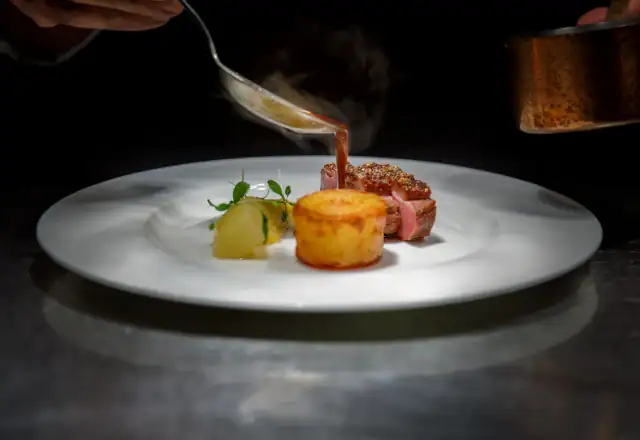
Rental options
Test and Development Kitchen Hire
Private space and professional equipment to develop recipes, run trials and prepare samples before you commit to production.
Free to inquire. We reply by email, usually within one business day.
A test kitchen or development kitchen is a commercial kitchen hired for recipe development, product trials and sample preparation. You book private or low-traffic time, use professional equipment to refine recipes at scale and gather the data you need to cost, price and standardize products before full production.
What a test kitchen is for
A test kitchen is a space where recipes are developed, tested and standardized before they go into production. Food brands, chefs, authors, retailers and startups use test kitchens to turn an idea into a recipe that works every time, at scale, with predictable cost and quality.
Home kitchens rarely replicate commercial conditions. Burner power, oven heat, batch sizes and holding times all behave differently at professional scale. Hiring a development kitchen lets you find those differences early, when they cost a little, instead of discovering them in the middle of your first production run.
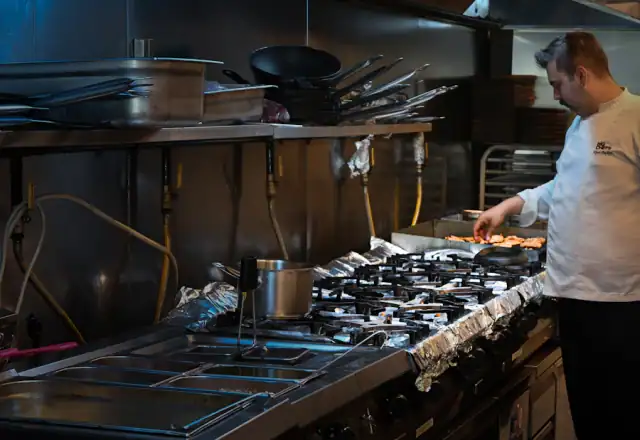
What you can do in a development session
- Develop and refine new recipes with professional equipment
- Scale a recipe from a few portions to full batches
- Test packaging, portioning and labeling
- Prepare samples for buyers, investors or retail pitches
- Run private tastings and feedback sessions with a small group
- Record timings, yields and costs for each step
Pair sessions with product costing and pricing work. Our guides on recipe costing and planning a product development trial show how to turn test results into decisions.
Equipment and space to look for
A good development setup includes accurate scales and thermometers, a range of burners and ovens, mixers and food processors, plenty of clean prep surface and refrigeration for samples. Having both small and professional-scale equipment lets you compare results at different sizes.
Ask whether you can use the cooking line, ovens and chillers at the same time, and whether there is quiet space for tasting or documentation. See the equipment and facilities page for the full checklist to bring to your tour.

Privacy and confidentiality
New recipes and concepts are valuable, so privacy matters. Book low-traffic times, ask whether the kitchen can be reserved for your sole use and agree how other tenants will be kept out of your area. Label samples clearly and take away or securely store any in-development products and notes.
For recipes you want to protect, use sensible measures: limit who attends, avoid leaving written formulas on benches and discuss confidentiality expectations with the operator. If a private session is essential, a private kitchen or short-term rental may suit better.
What to record during a development session
Good notes turn a session into a reusable recipe. Record exact weights of every ingredient, including water and seasonings, the equipment settings you used, times at each stage and the temperature readings you took. Note yields before and after cooking, and weigh waste so you can calculate cost accurately.
Take photographs at key stages so you can compare results between sessions, and write down sensory notes while the memory is fresh: appearance, aroma, texture and flavor. Over several sessions these records show you which changes helped and which hurt, and they form the basis of the written recipe your production team will follow.
How to run a productive session
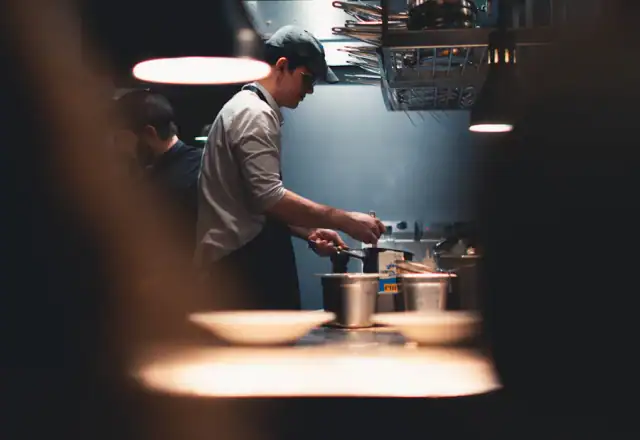
- Define one goal per session, such as scaling a recipe to 20 portions
- Prepare a plan with ingredient quantities, equipment and timings
- Weigh and record everything, including waste and yields
- Taste and evaluate at each stage, noting adjustments
- Take photos and notes for repeatability
- Clean down and review results before booking the next session
Two or three focused sessions usually achieve more than one very long, unfocused one, and they give you time to reflect between runs.
Getting useful feedback from tastings
Feedback is only useful if it is structured. Invite a small group that matches your target customer, provide the same portion to each person and ask the same questions: what they liked, what they did not and whether they would buy it. Avoid leading questions and collect written or scored answers rather than relying on memory.
Offer samples blind where you can, comparing versions without telling tasters which is which. Look for patterns rather than single opinions. When several people mention the same issue, such as too sweet or too salty, it is worth changing. Check local rules before you serve anyone food outside a private feedback setting.
From test recipe to production
A recipe is ready for production when it is repeatable, costed and safe. Record it in grams or milliliters rather than cups and spoons, include process steps with temperatures and times, and note critical control points such as cooking and cooling. Test shelf life and storage if the product will be sold, using the guidance on planning shelf-life testing.
When you are ready to scale, move to a shared kitchen for regular production, or a production kitchen for larger volumes.
Costs and booking
Development sessions are usually booked hourly, by half day or by full day. Costs depend on your hours, equipment and any private reservation. Because sessions are exploratory, build in extra time for setup and cleaning, and plan for ingredients that you may need to discard.
To start, tell us what you are developing and how many sessions you expect. Request a quote or book a tour to see the space.
More on kitchen rental formats
This page is part of our kitchen rental formats guide. Follow the pathways below to move up to the overview, compare alongside topics or go deeper into the detail.
Start with the overview
- Commercial Kitchen RentalEverything you need to choose between shared, private, hourly, ghost and production…
- Pricing and Rental PlansA clear explanation of what you pay for, what changes the price and how to get a quote…
- How Renting WorksSix clear steps from first inquiry to your first confirmed session, with what to prepare…
Compare alongside
- Kitchen StudioA working professional kitchen for filming, photography and content, with the practical…
- Short-Term Kitchen RentalFixed-date kitchen access for projects, trials, seasonal peaks and backup capacity, without…
- Teaching Kitchen HireHire a professional kitchen set up for teaching, with student workstations, clear…
- Hourly Kitchen RentalBook professional kitchen time by the hour for trials, events and irregular production, and…
Go deeper
- Book a Kitchen TourSee the equipment, test your workflow and ask the questions that matter. Tours are free…
- Recipe Costing for Small Food BusinessesYou cannot price well without knowing what each unit costs. Learn to cost a recipe…
- Planning a Product Development TrialA focused trial turns a recipe idea into a product you can make repeatedly and profitably.
- Kitchen Rental for Food StartupsA practical plan for launching a food business with a rented kitchen: entry plans, trials…
Frequently asked questions
Straight answers to the questions food businesses ask most about test and development kitchen hire.
What is the difference between a test kitchen and a normal commercial kitchen?
The kitchen may be the same, but a test or development booking focuses on private time, precise measurement and trial work rather than routine production.
Can I run a tasting in a test kitchen?
Often yes for small groups, subject to the kitchen’s rules and permits. Ask before you invite guests.
Is my recipe confidential?
You control what you bring and leave behind. Ask the operator about private reservations and agree confidentiality expectations.
How many sessions will I need?
Most recipes need two to four focused sessions to reach a repeatable version, depending on complexity.
Can I hire a test kitchen for a day?
Yes. Half-day and full-day bookings are common for development work.
Can I sell samples?
Only if you hold the right permits. Sampling for development and private feedback usually has different rules from selling, so check locally.
Can I bring ingredients I want to test?
Yes. Bring your own ingredients, and tell us in advance about any allergens.
How do I protect a recipe I am developing?
Book low-traffic or private time, limit who attends and avoid leaving written formulas behind.
How much does a development session cost?
It depends on hours, equipment and privacy. Request a quote with your plan and we will advise.
Ask about this kitchen option
Tell us what you need and we reply by email, usually within one business day, with a clear next step.