Guide
Cloud Kitchen vs Production Kitchen: Which Model Fits?
Both are professional kitchens, but they are built for different jobs. This guide shows how to tell which one your business needs.
Free to inquire. We reply by email, usually within one business day.
A cloud or ghost kitchen prepares made-to-order meals for immediate delivery, so it prioritizes ticket speed, packing and courier pickup. A production kitchen cooks in bulk for storage and distribution, so it prioritizes throughput, cooling and loading. Choose by whether your product is eaten the same day or stored and shipped.
Two models, two workflows
In a cloud kitchen an order arrives, a cook prepares it to a timed standard, a packer seals and labels it and a courier collects within minutes. Every meal is a unit of work. In a production kitchen a team cooks a large batch of one item, cools it, portions it and stores or ships it for later use. Every batch is a unit of work.
That difference shapes everything: equipment, layout, staffing, timing and cost. A kitchen optimized for one model is usually awkward for the other.
Understanding which workflow matches your product is the first step in choosing a kitchen.
Comparison at a glance
| Question | Cloud kitchen | Production kitchen |
|---|---|---|
| Orders | One at a time, to order | Batches in volume |
| Output | Meals for same-day delivery | Product for storage and distribution |
| Layout | Fast cooking line, packing, pickup | Large equipment, cooling, loading |
| Speed priority | Ticket time | Throughput and consistency |
| Customers | Consumers via apps | Retailers, sites, events |
| Staffing | Line cooks and packers | Prep, cooking and packing teams |
Equipment and layout differences
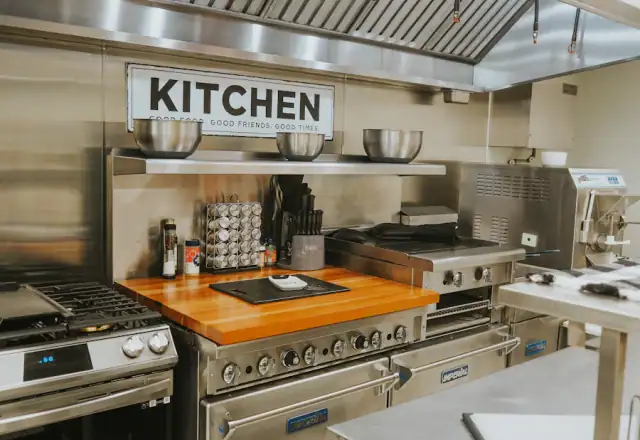
Cloud kitchens favor versatile stations: griddles, fryers, ranges and a clear packing and pickup flow. Production kitchens favor scale: steam kettles, tilt skillets, rack ovens, blast chillers and large mixers, plus extensive refrigeration. Check cooking line and packaging area facilities for the first model, and refrigerated storage and loading access for the second.
If you need both, such as a meal prep brand that cooks in bulk and packs for delivery, you may use a production kitchen with a packing area, or a cloud kitchen with generous storage.
Cost drivers and economics
Cloud kitchens charge for a station or unit, and your cost per meal includes platform commissions, packaging and delivery. Production kitchens charge for space and time, and your cost per unit falls with batch size. Cloud economics reward high order volume through apps; production economics reward consistent bulk demand.
Model both with your numbers: expected orders per day for cloud, and units per week for production. The cost guide shows a simple framework.
Hybrid models and phased growth
Some businesses combine both models. A meal prep brand might batch cook in a production kitchen and use a cloud kitchen station for made-to-order extras. A restaurant might use a production kitchen to prep sauces and a cloud kitchen for delivery-only concepts. Phased growth works well: start with the model that matches your first customers, then add the second when volume justifies it.
Keep recipes and processes documented so that products move between kitchens without losing quality.
Food safety differences
Cloud kitchens must keep hot food hot and cold food cold through packing and courier transit, with tamper-evident packaging and allergen labels. Production kitchens face the challenge of cooling large batches fast, from 135°F to 70°F within two hours and to 41°F within four more, and keeping cold chain integrity during storage and distribution.
Both need strong hygiene and record keeping, but the critical control points differ. See planning safe cooling of prepared food.
Technology and systems
Cloud kitchens depend on order tablets, delivery platform integrations and reliable internet. Production kitchens depend on production planning sheets, inventory systems and temperature monitoring. Choose tools that match your model and keep them simple. A spreadsheet that everyone uses beats a complex system nobody understands.
Ask each kitchen what connectivity and data systems it supports, and test them during your tour.
Questions to ask each type of kitchen
- Cloud: how are courier pickups organized and where do riders wait?
- Cloud: how fast is the cooking line and how is packing laid out?
- Production: how much cooling and cold storage can I reserve?
- Production: what are loading hours and vehicle limits?
- Both: how are allergens and labeling controlled?
- Both: what are the notice and upgrade terms?
Which model suits which business
- Delivery-only restaurant brands and virtual concepts: cloud kitchen
- Caterers preparing large events: production kitchen
- Meal prep brands with weekly menus: production, with packing space
- Restaurant groups centralizing prep: production kitchen
- Packaged food brands: production kitchen
- Restaurants testing delivery concepts: cloud kitchen
If you sit between the two, start with the model that matches your first customer and add the other as you grow.
Reading the numbers: unit economics
For cloud kitchens, calculate contribution per order after ingredients, packaging, labor, platform commission and delivery. For production kitchens, calculate cost per unit after ingredients, packaging, labor and kitchen time at your batch size. Compare against your selling prices and test what happens if volume drops by a third.
A model that only works at peak volume is fragile. Choose the kitchen and format that keep you profitable in ordinary weeks.
Staffing and skills for each model
Cloud kitchens need fast, versatile line cooks and a reliable packer who can handle peak ticket rushes, often with a short menu and tight timing. Production kitchens need disciplined prep cooks who follow standardized recipes, plus someone who understands cooling, labeling and records. Hiring for the wrong profile is a quiet cause of failure in both, so write role descriptions that match the workflow.
Training also differs. Cloud staff learn speed and accuracy under pressure; production staff learn consistency and documentation.
Risk and resilience
Cloud businesses are exposed to platform changes, commissions and review swings. Production businesses are exposed to customer concentration and cold chain failures. Reduce risk by diversifying channels, keeping buffer stock where appropriate and having a backup plan for equipment failure.
Review risks every quarter and adjust. A kitchen that offers flexible terms makes it easier to adapt.
Making the choice and next steps
Write down how your product reaches the customer, how many units you sell at peak and what must happen within minutes versus days. That tells you which model to price first. Then get quotes for both on the same assumptions and compare.
Read the pages on ghost kitchen rental and production kitchen rental, then book a tour to see the layouts in person.
More on choosing and renting a kitchen
This page is part of our choosing and renting a kitchen guide. Follow the pathways below to move up to the overview, compare alongside topics or go deeper into the detail.
Start with the overview
- Kitchen Rental Resource CenterPlain-English guides organized by what you need to do: choose a kitchen, operate safely and…
- Pricing and Rental PlansA clear explanation of what you pay for, what changes the price and how to get a quote…
- How Renting WorksSix clear steps from first inquiry to your first confirmed session, with what to prepare…
Compare alongside
- Hourly Rental vs Monthly MembershipThe cheapest plan depends on how often you cook. Use this break-even method to pick the…
- Commercial Kitchen vs Home KitchenA home kitchen can start a business, but it rarely scales. See the real differences in…
- Renting a Kitchen vs Building Your OwnBuilding your own kitchen can pay off, but only at the right stage. Use this framework to…
- Shared vs Private Kitchen RentalShared kitchens cost less and private kitchens give control. This guide shows how to decide…
Go deeper
- Cloud, Dark and Ghost Kitchen RentalDelivery-first kitchen space with rider collection and dispatch support, for brands that…
- Central Production Kitchen RentalBulk production space with the throughput, cooling and storage to support volume cooking…
- Meal Prep Kitchen RentalHow meal prep and meal delivery businesses use a rented commercial kitchen: portioning…
- Starting a Delivery-Only Food BusinessDelivery-only brands skip the dining room but face new challenges. Learn how to launch lean…
Frequently asked questions
Straight answers to the questions food businesses ask most about cloud kitchen vs production kitchen.
Can one kitchen do both?
Some can, but most are optimized for one workflow. Ask how the layout supports your mix.
Is a ghost kitchen cheaper?
Per month often yes, but platform fees and packaging add cost.
Which is better for meal prep?
Usually production, with a packing area, since meals are made in batches.
Do both need the same permits?
Broadly yes, with extra rules for distribution and labeling in production.
Can I start in one and move?
Yes. Many brands start in a ghost kitchen and add production as demand grows.
What about catering?
Catering fits production-style kitchens with loading access and holding equipment.
Put this guide into practice in a real kitchen
Tell us about your food business and the hours you need. We match you with a licensed kitchen and send a written quote.