
Guide
Scheduling Staff in a Shared Kitchen: Roles, Access and Induction
More people in a shared kitchen means more coordination. Learn how to schedule roles, access and training across shifts.
Free to inquire. We reply by email, usually within one business day.
To schedule staff in a shared kitchen, define roles for each stage, match headcount to your booked slot and station size, give every person induction and certification, issue individual access, brief the team at the start of each shift, stagger arrival and breaks to avoid crowding and keep a rota that both you and the operator can see.
Why shared kitchens need careful staffing
In a shared kitchen your team shares space and equipment with other businesses. Too many people crowd the bench and raise safety risks, too few leave equipment idle and your slot half used. Every person also needs training, certification and access, which takes time to arrange.
A simple staffing plan avoids these problems and makes costs predictable. It also keeps relationships with the operator and other tenants smooth.
This guide shows how to match staff to the slot, station and task.
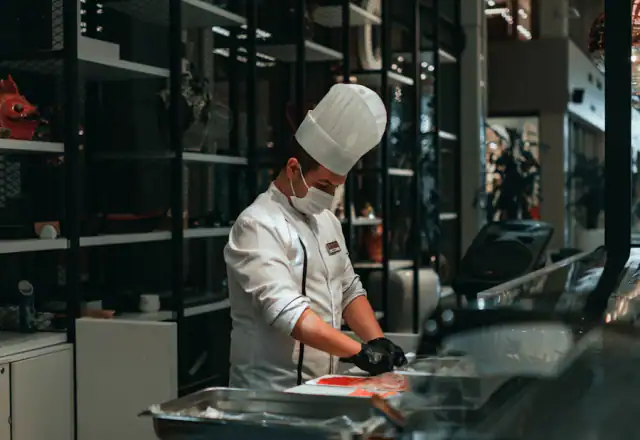
Match headcount to the station and slot
Count how many people can work comfortably at your allocated bench and around your equipment, and how many your booked hours justify. More people shorten a session only up to a point, because stations and equipment become the limit.
- Bench length per person
- Shared equipment queues
- Walkway space and safety
- Cost of staff time versus cost of kitchen time
Try different team sizes in trial sessions and measure output per hour to find your best number.
Define roles and responsibilities
Assign clear roles, such as prep, cooking, packing and cleaning, and write them down. Name who is responsible for hygiene checks, temperature records and checking out. Clear roles reduce collisions and make training easier.
Allow flexibility for illness or unexpected demand, with cross-trained backups for key tasks.

Example rota for a small production team
| Time | Prep cook | Line cook | Packer |
|---|---|---|---|
| 6:00 | Setup and weigh | Setup and preheat | — |
| 7:00 | Prep vegetables | Cook batch one | Set up packing |
| 9:00 | Prep batch two | Cook batch two | Pack batch one |
| 11:00 | Clean prep area | Cool and chill | Pack batch two |
| 12:00 | Wash-up | Wash-up | Label and load |
The numbers are illustrative; adapt them to your production and the station you have.
Using technology to manage shifts
Shared calendars, messaging groups and simple scheduling apps reduce confusion. Share the rota in one place and update it promptly. Use reminders for shifts and certificate renewals. Keep the system light so that staff will use it, and back up the data.
Technology should save time, not create work.
Employment basics for kitchen teams
If you employ staff, you carry legal duties on pay, hours, breaks, safety and records, which vary by state. Check local rules on minimum wage, overtime and food handler requirements, and keep time records. Written role descriptions and a short staff handbook with kitchen rules protect everyone. Ask your accountant or a local business adviser about payroll and employment law. This guide is general information, not legal advice.
Good practices also improve retention, which lowers training cost and improves quality.
Rota template and review
- List shifts, stations and equipment bookings
- Assign named people to each role
- Confirm certification and access for everyone
- Share the rota with staff and, where needed, the operator
- Record attendance and hours
- Review output and costs monthly
Adjust the template as your business changes, and keep versions so that you can learn from what worked.
Communication between shifts and with the operator
Use a shared logbook or messaging group for handover notes, equipment issues and stock levels. Agree one person to deal with the operator so messages are clear. Tell staff how to report problems and who to call out of hours. Clear communication prevents repeated mistakes and shows the operator you are a reliable tenant.
Review communication habits when you add staff or shifts.
Certification, induction and access
Every person who handles food needs the right training and certification, and every person who enters the kitchen needs an induction and their own access credential. Arrange these before they start, since induction can require booking. Never share credentials.
Keep copies of certificates and induction records. See rental requirements and security and access.
New starters should shadow an experienced person for their first session.
Run a short briefing every shift
Start each shift with a five-minute briefing: orders, allergens, special tasks, equipment issues and safety reminders. Confirm who does what and when. A quick start meeting reduces mistakes more than any other single habit.
Finish with a short debrief noting what went well and what to improve, and record any issues for the next team.
Keep notes in a shared logbook so that information passes between shifts.

Stagger arrivals, breaks and changeovers
Avoid everyone arriving, taking breaks and leaving at the same time. Stagger starts so that stations are ready, breaks so that equipment is covered and finishes so that cleaning is shared. Plan handovers if two teams share a station in one day.
Respect other tenants’ slots. Late arrival or overrun affects them, and persistent problems damage your standing.
Allow time for changing, handwashing and entering the kitchen before the slot starts.
Training and cross-skilling
Train staff on your recipes, the kitchen’s equipment and your hygiene standards. Cross-skilling means each person can cover more than one role, which makes scheduling flexible and absences manageable. Use a simple skills matrix listing each person and the tasks they can do alone. Update it after each training session and use it when you build the rota.
Invest in your team’s skills. They are the part of your business no kitchen can supply.
Dealing with conflicts and late arrivals
Late arrivals eat into slots and affect the next tenant. Set expectations about punctuality, provide a contact number for emergencies and agree what happens if someone is late. If conflicts arise with other tenants, raise them calmly with the operator rather than arguing on the floor. A respectful tone and quick resolution protect your standing in the kitchen.
Keep notes of incidents so that patterns can be addressed.
Cover, absences and peak periods
Plan for absences with a list of trained backups and a clear process for calling them. For peak periods, add temporary staff early and induct them before the rush. Think about overtime rules and rest periods to avoid fatigue.
Tired staff make mistakes, so schedule realistic shifts and leave margin.
If recurring peaks stretch your team, consider short-term kitchen rental for extra capacity.

More on running a rented kitchen
This page is part of our running a rented kitchen guide. Follow the pathways below to move up to the overview, compare alongside topics or go deeper into the detail.
Start with the overview
- Kitchen Rental Resource CenterPlain-English guides organized by what you need to do: choose a kitchen, operate safely and…
- Pricing and Rental PlansA clear explanation of what you pay for, what changes the price and how to get a quote…
- How Renting WorksSix clear steps from first inquiry to your first confirmed session, with what to prepare…
Compare alongside
- Designing a Food Preparation WorkflowA good workflow moves product in one direction with no backtracking. Learn how to map and…
- Planning a Batch Production ScheduleA written schedule turns a chaotic production day into a repeatable routine. Learn how to…
- Calculating Oven Capacity for ProductionOven time is the limit for most bakers. Learn to turn trays, bake times and changeovers…
- Reporting Kitchen Equipment FaultsPrompt, clear fault reports keep everyone safe and protect your deposit. Here is a simple…
Go deeper
- Shared Kitchen RentalAllocated workstations, shared professional equipment and clear scheduling, the most…
- Staff and Changing FacilitiesGood facilities for your team protect hygiene and keep people working well. Here is what to…
- Your First Day in a Rental KitchenYour first session sets the pattern for everything after it. Use this checklist to start…
- Rental RequirementsA plain checklist of what you need before you rent, why each item matters and how to check…
Frequently asked questions
Straight answers to the questions food businesses ask most about scheduling staff in a shared kitchen.
How many staff can work at one station?
It depends on bench length and equipment. Test during a trial session.
Does each person need an induction?
Yes, every person who works in the kitchen.
Can temporary staff use my access?
No. Each person needs their own credentials.
How do I handle absences?
Keep a list of trained backups.
Should the operator see my rota?
Sometimes it helps, especially for access and safety.
What if the team keeps outgrowing the station?
Consider a larger format or additional hours.
Put this guide into practice in a real kitchen
Tell us about your food business and the hours you need. We match you with a licensed kitchen and send a written quote.