Guide
Designing a Menu for Efficient Production
A smart menu is shorter, shares ingredients and fits your equipment. It saves hours and money every week.
Free to inquire. We reply by email, usually within one business day.
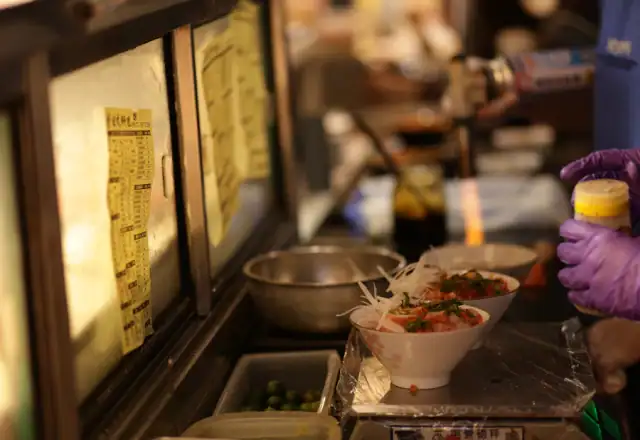
To design a menu for efficient production, choose dishes that share ingredients and prep steps, fit your equipment, hold and travel well, can be made in batches, use consistent portions and keep waste low. Test each item for time, cost and quality, and remove items that slow production or sell poorly.
Why menu design drives efficiency
Every item on a menu adds ingredients, steps and complexity. A long menu increases waste and mistakes. A designed menu reduces both and lets you cook faster in a booked slot.
Start with what you can do very well.
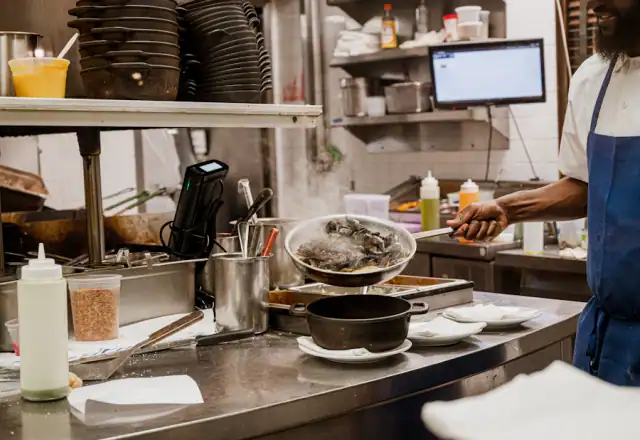
Match your equipment
Design around the equipment you can use at once. Avoid menus that need every burner at once.
See cooking line.
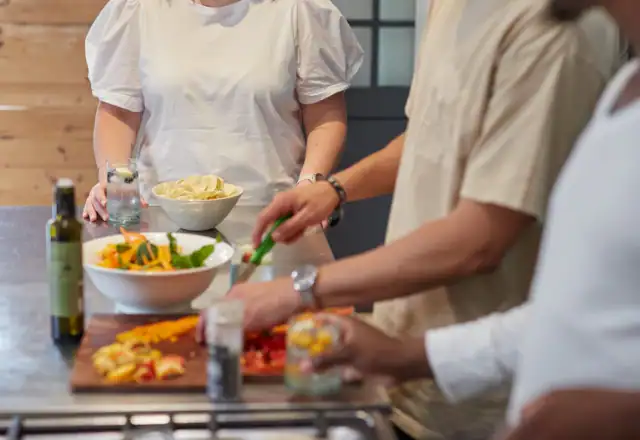
Seasonal updates without chaos
Refresh the menu twice a year by swapping a small number of items for seasonal ones that use the same base preparations. Test new dishes for production time, cost and shelf life before launch, and retire items that underperform. A controlled update keeps customers interested without adding complexity to the kitchen.
Menu costing and engineering
Calculate the margin of each item, plot popularity against margin and promote items that are both popular and profitable. Reprice or redesign items with high popularity and low margin, and remove items with low popularity and low margin. Revisit the analysis every quarter.
Batch, stage and cool in the right order
Plan production in a sequence that respects food safety and equipment. Start with items that need long cooling or chilling, such as stocks and sauces, then move to items that finish fast. Keep raw and ready-to-eat tasks separate in time or space. Use a prep schedule that lists who does what and when, with times for cooling and packing. A good schedule reduces idle time and keeps temperatures safe from start to finish.
Cut complexity that customers do not value
Many menus carry items that few people order and that cost more time than they earn. Rank dishes by sales and margin each month, and remove the weakest. Reduce modifiers and custom orders that slow the line. Keep a short list of seasonal specials, which let you use surplus ingredients and keep the menu fresh. A smaller menu also improves quality, because the team practices fewer recipes and gets better at each one.
Review production against the menu every month
Compare planned and actual production: how many units you made, sold and wasted, and how long each took. Use these numbers to adjust prep quantities, pricing and the menu. Ask customers what they love, and protect those items. Update recipe cards and costing whenever you change something. A monthly review turns the menu from a fixed list into a tool that steadily raises margin and reduces stress in the kitchen.
Choose dishes that hold and travel
For catering, delivery and meal prep, items must hold temperature and texture. Test after holding time.
Control portion and cost
Standardize portions and cost each dish. Remove items with low margin or high waste.
See recipe costing.

Communicating changes to customers
Announce changes on your website, labels and ordering platforms at the same time so customers see consistent information. Update allergen details whenever ingredients change, and thank loyal customers for feedback. Clear communication prevents confusion and complaints.
Example of an efficient menu
A small cafe menu might have a roast vegetable base used in a bowl, a wrap and a soup; a chicken preparation used in a salad, a sandwich and a rice dish; and a sauce range of three items. Total unique ingredients stay low while customers see many choices. This approach cuts waste and prep time and makes training easier.
Match menu items to equipment you actually have
Rented kitchens have fixed equipment and limited hours, so a menu that depends on a deep fryer you cannot book is a problem. List the equipment each dish needs and the minutes it occupies, then check for clashes. If three items need the oven at the same time, stagger them or change one method. Choose dishes that hold well after cooking, since delivery and retail both add delay. Test every item at production volume, not just at a home scale.
Measuring menu efficiency
Track prep minutes per portion, ingredient count, waste percentage and gross margin for each item. Compare them monthly and set targets. A menu that scores well on these numbers produces more with the same kitchen hours and gives customers consistent quality.
Design the menu around shared prep
An efficient menu uses a small set of base preparations in many ways. Roast chicken can become a salad, a wrap and a soup; a tomato base can serve pasta, shakshuka and pizza. Group dishes by shared ingredients and techniques, and cook them in the same session. This reduces the number of ingredients you buy, the waste you throw away and the time spent changing between tasks. Review your menu for items that need unique ingredients or equipment and either simplify or price them higher.
Plan batch and assembly
Cook components in batches and assemble to order. This speeds service and reduces waste.
Review seasonally
Update the menu with seasonal ingredients and sales data. Keep a core of best sellers.
See seasonal production.
Test, time and refine
Time each dish and the whole menu in a trial session. Remove or simplify items that slow you. Gather feedback.
Change one thing at a time.
Consider allergens and dietary needs
Offer clear choices for common needs and keep allergens organized. Avoid too many variations.
See allergen management.
More on starting and growing a food business
This page is part of our starting and growing a food business guide. Follow the pathways below to move up to the overview, compare alongside topics or go deeper into the detail.
Start with the overview
- Kitchen Rental Resource CenterPlain-English guides organized by what you need to do: choose a kitchen, operate safely and…
- Pricing and Rental PlansA clear explanation of what you pay for, what changes the price and how to get a quote…
- How Renting WorksSix clear steps from first inquiry to your first confirmed session, with what to prepare…
Compare alongside
- Photographing Food Products in a Kitchen StudioGood photos sell food. Learn how to light, style and shoot your products in a commercial…
- Standardizing Recipes Across Production RunsCustomers notice inconsistency instantly. A standard recipe makes your product repeatable…
- Planning a Product Development TrialA focused trial turns a recipe idea into a product you can make repeatedly and profitably.
- Scaling from Small Batches to Larger ProductionMore volume is not just bigger pots. Learn what changes when you scale and how to keep…
Go deeper
- Commercial Kitchen RentalEverything you need to choose between shared, private, hourly, ghost and production…
- Designing a Food Preparation WorkflowA good workflow moves product in one direction with no backtracking. Learn how to map and…
- Recipe Costing for Small Food BusinessesYou cannot price well without knowing what each unit costs. Learn to cost a recipe…
- Pop-Up Kitchen RentalShort-term kitchen space for pop-up restaurants and menu trials, with advice on service…
Frequently asked questions
Straight answers to the questions food businesses ask most about designing a menu for efficient production.
How many items should I offer?
As few as sell well, often five to ten.
Should I use many ingredients?
No. Share them.
How do I test holding quality?
Hold and taste after the usual delay.
What if an item is popular but slow?
Simplify the recipe or raise the price.
How often to update?
Seasonally.
Can I add specials?
Yes, using existing ingredients.
Put this guide into practice in a real kitchen
Tell us about your food business and the hours you need. We match you with a licensed kitchen and send a written quote.