Guide
Setting Up a Meal Prep Packing Station
A well-laid packing station can double your output. Learn how to design one that is fast, accurate and hygienic.
Free to inquire. We reply by email, usually within one business day.
A meal prep packing station should flow in one direction from cooled food to portioning, sealing, labeling and chilled holding, with scales, containers, lids, labels and gloves within reach. Keep it clean and apart from raw preparation, standardize portion sizes, check labels against orders and move finished meals into the cooler quickly.
Why packing deserves a plan
Many meal prep businesses cook well and pack badly. Food waits on a bench, labels are applied in a rush and orders are mixed up. A packing station designed around the work turns packing from a bottleneck into a smooth line. It also protects safety, because food spends less time out of temperature and fewer mistakes reach customers.
This guide sets out a simple layout and routine you can adapt in a shared kitchen.
Start by timing your current packing, so you know what improvement looks like.
Choose the space
Look for a clean bench of enough length, close to refrigeration and away from raw preparation. Ask the kitchen which areas are suitable for packing and whether you can reserve one. If space is tight, schedule packing after raw work and sanitize in between.
See food packaging area for what to check on a tour.
Good light helps you read labels and see portion size accurately.
Training staff for the packing line
Walk new staff through the station layout, portion sizes, label checks and hygiene rules. Use photos of a correctly packed meal as a reference. Perform spot checks for weight and labeling, and record the results. Regular practice keeps errors low even at high volume.
Lay out the line
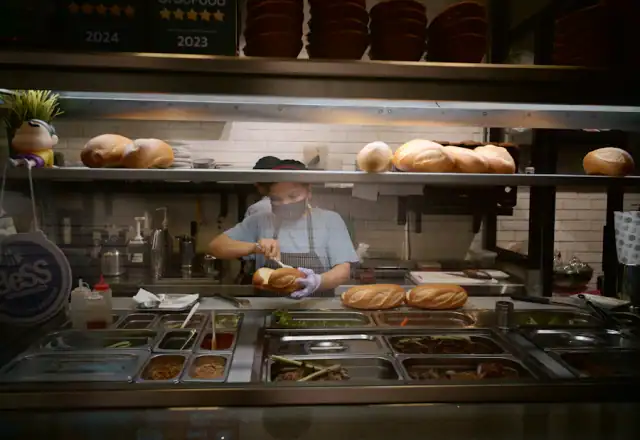
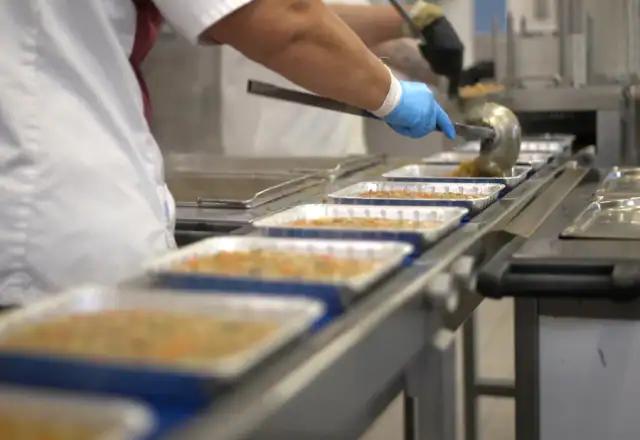
Arrange the bench from left to right: cooled food, containers and lids, scale, filling, sealing, labeling and finished boxes. Keep each item within an arm’s reach and place heavy items low. Use trays or racks to hold containers waiting to be filled.
- Cooled food in shallow pans
- Empty containers and lids
- Scale and portioning tools
- Sealer or lid press
- Label station with allergen check
- Chilled holding for finished meals
Walk the layout with an empty container to check for backtracking.
Designing the packing station for speed and safety
Arrange the station in a line from containers to filling to sealing to labeling and cold storage, so that food moves forward and never crosses back. Keep a handwashing sink and sanitizer nearby, use a scale to portion consistently and keep label printers close to the sealer. Clear the station of unrelated items to avoid cross-contact.
Portion accurately
Use scales or calibrated scoops to keep portions consistent. Check the first and last portion of each batch and a few in between. Consistent portions protect margins and customer trust, and they make pricing and nutrition claims reliable.
Train everyone to use the same method. Label scoops with their size and put them where they are used.
Calibrate scales regularly and keep them clean.
Seal, label and check
Seal containers securely and check that lids are intact. Apply labels with the product name, ingredients, allergens, date and storage instructions, plus batch code. Check each label against the order or recipe sheet before a container moves on. Keep an allergen matrix at the station.
See batch coding and product traceability and food labeling regulations.
Mistakes at labeling are the most serious errors in meal prep.
Improve with timing and feedback
Time the line for ten minutes and count containers per person per hour. Try changes, such as moving the scale or adding a person at the slowest step, and time again. Ask staff for ideas. Keep a record of the layout that works and photograph it.
Review again when your menu or volume changes. A packing line that suits fifty meals may need adjustment at five hundred.
Ergonomics and comfort at the station
Packing is repetitive. Adjust bench height, use mats and rotate tasks to avoid strain. Place heavy items at waist height and keep frequently used items within easy reach. Take short breaks and keep hydrated. Comfortable staff pack faster and make fewer mistakes.
Ask staff what annoys them about the station and fix it.
Keep it hygienic
Wash hands before packing, change gloves between tasks, wear hair coverings and keep personal items away. Sanitize the bench and tools between products and before and after the session. Cover food that is waiting, and do not leave containers uncovered.
Pack one product at a time and clear the bench before starting another. See the kitchen rules.
A clean station is also a fast one.
Move finished meals into chilled holding
Place finished meals into the cooler as soon as they are sealed and labeled, in shallow layers so air can circulate. Do not stack warm containers. Record temperatures at intervals and plan dispatch so meals leave in order.
Check available space with refrigeration capacity planning.
Packing station metrics to track
- Containers packed per person per hour
- Portion weight variation
- Label errors per hundred orders
- Time from cooled food to chilled holding
- Waste and returns
- Order accuracy on delivery
Pick three to start with and review them weekly.
Scaling the packing line
As volume grows, add stations rather than crowding one. Separate roles into portioning, sealing and labeling, and use a conveyor or rolling trolley if needed. Standardize layouts so staff can move between stations. If the kitchen cannot support it, consider a larger format.
See food packaging area and production kitchen rental.
Labeling and traceability on packed meals
Each meal should show the product name, ingredients with allergens, net weight, batch or date code, storage instructions and use-by date, plus your business name and address. Keep a batch record that links the code to ingredient suppliers and production date. This record is vital if a customer complaint or a recall arises.
More on running a rented kitchen
This page is part of our running a rented kitchen guide. Follow the pathways below to move up to the overview, compare alongside topics or go deeper into the detail.
Start with the overview
- Kitchen Rental Resource CenterPlain-English guides organized by what you need to do: choose a kitchen, operate safely and…
- Pricing and Rental PlansA clear explanation of what you pay for, what changes the price and how to get a quote…
- How Renting WorksSix clear steps from first inquiry to your first confirmed session, with what to prepare…
Compare alongside
- Food Temperature Records for Kitchen TenantsRecords prove that food was kept safe. Learn what to log, how often and how to make it a…
- Planning Safe Cooling of Prepared FoodCooling is where large batches most often fail food safety. Learn how to plan capacity and…
- Building a Kitchen Cleaning ScheduleA written cleaning schedule keeps standards high without relying on memory. Here is how to…
- Receiving Supplier Deliveries at a Shared KitchenDeliveries are the first control point for food safety. Learn how to receive, check and…
Go deeper
- Food Packaging AreaA clean, organized packing area turns cooked food into a finished product. See what to look…
- Meal Prep Kitchen RentalHow meal prep and meal delivery businesses use a rented commercial kitchen: portioning…
- Batch Coding and Product TraceabilityIf something goes wrong, you need to know which products are affected. A simple batch…
- Planning Refrigeration CapacityCold space is limited and expensive. Learn to size it from your real flow of ingredients…
Frequently asked questions
Straight answers to the questions food businesses ask most about setting up a meal prep packing station.
How many people should pack?
It depends on volume. Test two and three people and compare output per hour.
Do I need a sealing machine?
Not always, but it improves speed and shelf life.
Can I pack in my cooking station?
Better to pack on a clean, separate bench.
How do I avoid label errors?
Use a matrix and check each label against the order.
What temperature should meals reach?
Cooled to 41°F or below before chilled holding.
Can I leave packaging supplies at the kitchen?
Often in dry storage.
Put this guide into practice in a real kitchen
Tell us about your food business and the hours you need. We match you with a licensed kitchen and send a written quote.